OCS KNOWLEDGE HUB / AMA
What Is an Ama Diver?
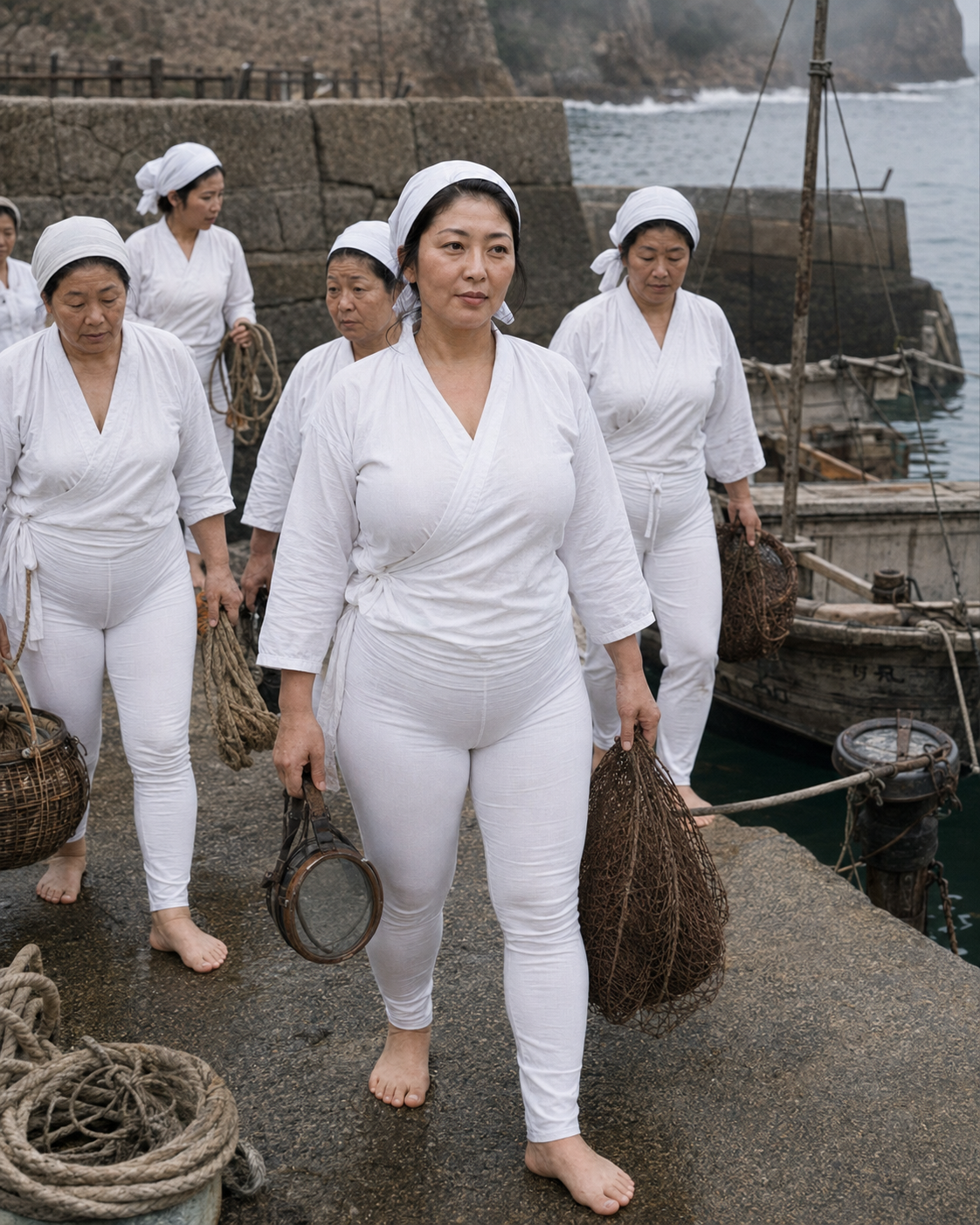
Ama are Japanese women free divers who traditionally harvest abalone, turban shells, seaweed and other marine resources by holding their breath. At OCS, we follow ama not only as individuals, but as an entire working world: sea, harbor, boats, huts, tools, clothing, breath and local rules.
10-SECOND ANSWER
Ama are breath-hold divers who harvest from the sea without scuba equipment.
Their methods differ by region, period and fishing ground. Some work close to shore; others operate with boats and assistants. Workwear, goggles, harvesting tools and the use of huts also changed over time. In Toba and Shima, ama fishing remains one of Japan’s best-known living maritime traditions.
HOW THE WORK MOVES
The dive is only one part of the job.
To understand ama work, you have to look before and after the underwater moment: reading the sea, preparing equipment, entering the water, holding the breath, searching and harvesting, resurfacing, recovering, returning ashore, warming the body and preparing for the next cycle. OCS treats this sequence as a connected working system rather than a single dramatic dive.
TWO MAJOR FORMS
There is no single way to be an ama.
Research in Mie commonly distinguishes two broad operating forms. Kachido divers work largely under their own power, often near shore. Funado work as part of a boat-based system with assistance from the surface and may operate in deeper grounds. Local terminology and practice vary, so these categories should not be treated as universal templates for every community.
Often associated with nearshore rocky grounds and the diver’s own float and harvesting tools.
The diver and surface support work together, including in deeper fishing grounds.
TOOLS / PLACE / BODY
What makes up the ama world?
HISTORY
A long history — and a changing material world.
Evidence of marine harvesting in Japan reaches deep into prehistory, while women divers appear in later literary and historical records. In Toba and Shima, ama fishing became connected not only to work, but also to ritual, local belief and the presentation of abalone to Ise Jingu. Yet the physical world of the work was never frozen: goggles, boats, harbors, clothing and eventually wetsuits changed the conditions in which ama worked.
REGIONAL WORLDS
Ama culture is not one place.
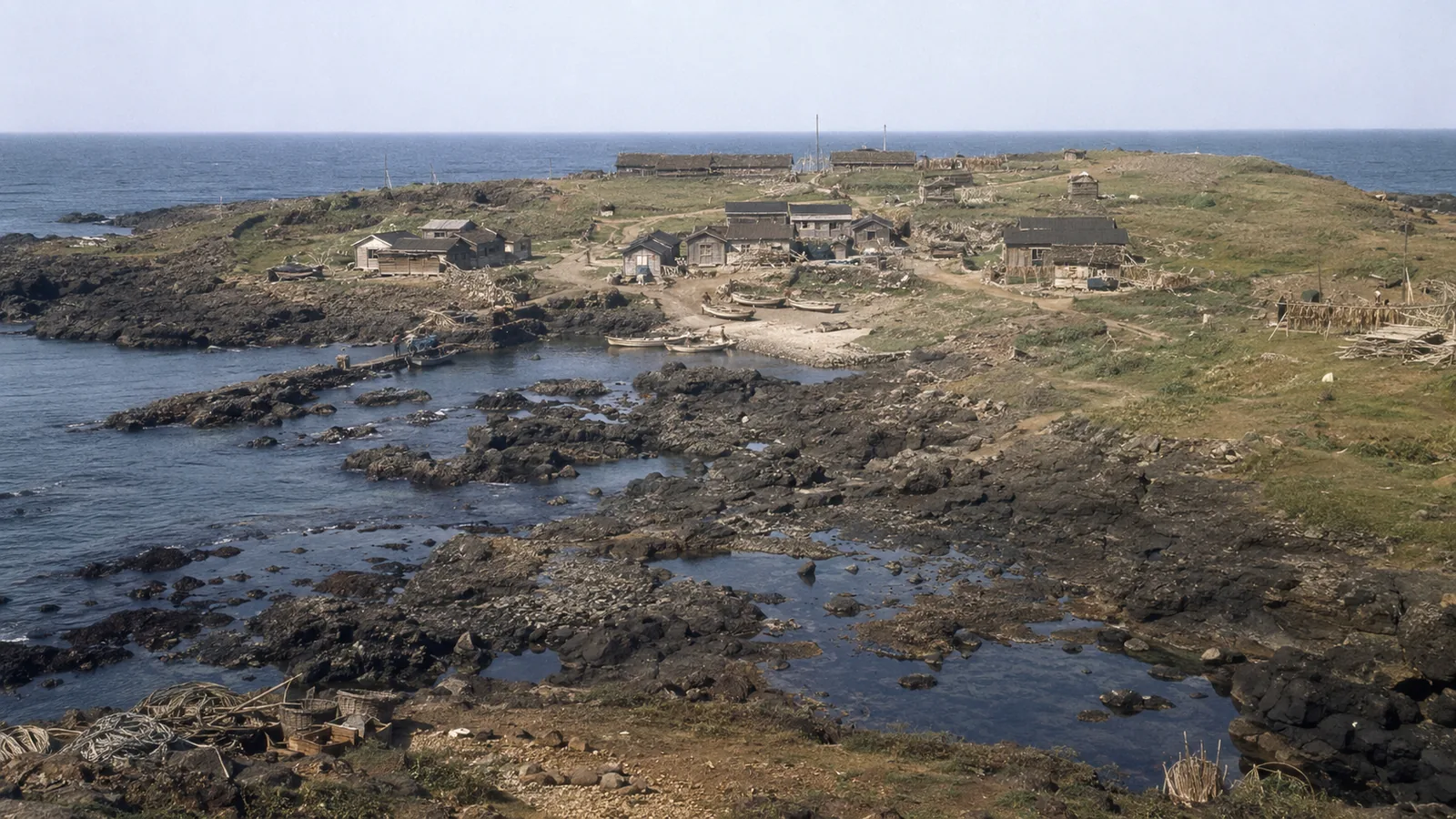
OCS treats AMA as a larger maritime work culture made up of distinct regional worlds. Anori in Mie and Wajima–Hegura Island in Ishikawa share breath-hold diving, but not the same coastline, clothing, boats, tools, community rules or historical trajectory.
FAQ
Common questions
Traditional ama fishing is based on breath-hold diving without underwater breathing apparatus.
Targets vary by region and season, but can include abalone, turban shells, sea urchins and seaweed.
No. Workwear differed by region and period. The famous white outfit should not be treated as a universal image of all ama history.
More than a rest area: it can support preparation, warming, changing clothes, equipment care and the social side of work.
Key public references include the Ama Research Center at Mie University and official cultural resources from Shima City. OCS images are historically informed visual reconstructions, not documentary photographs of the specific people, moments or camera positions shown.