OCS ARCHIVE / OBJECT / AMA DIVING TOOL
What is a kaginomi?
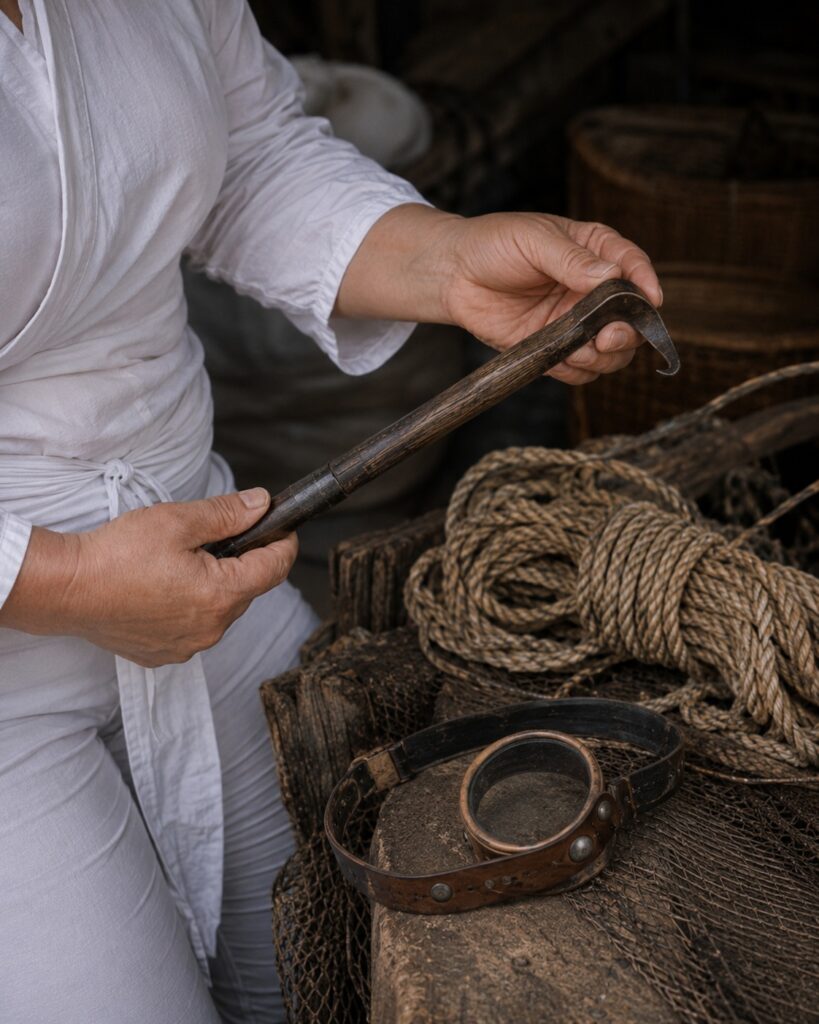
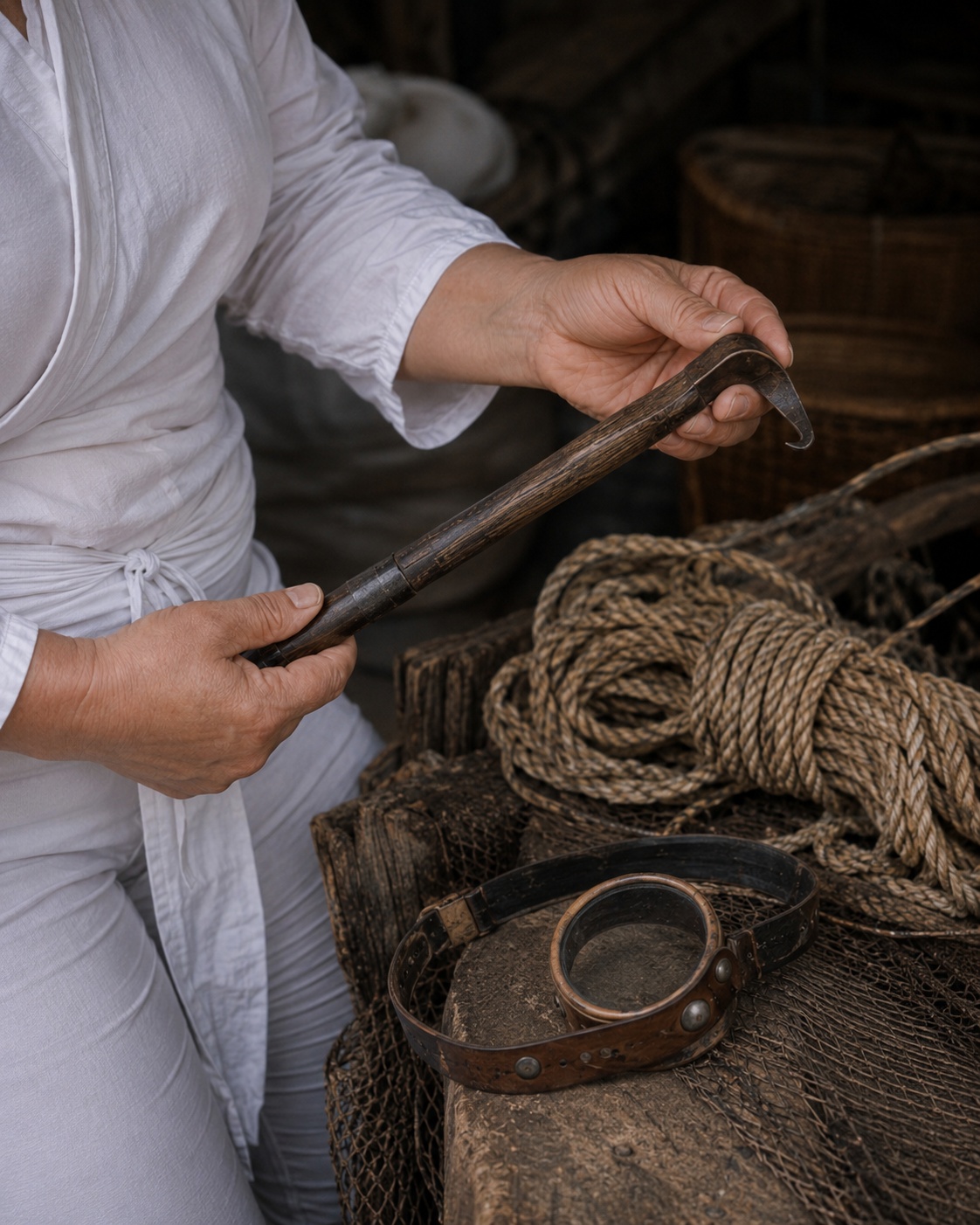
A hand tool used by ama divers to detach or hook marine catch from rock.
What is it used for?
Mie Prefecture’s cultural heritage materials describe the kaginomi as a gathering tool made from iron or stainless steel. One side has a flat edge used to detach catch such as abalone from rock; the hooked side can be used to catch items such as sea urchins. The tool supports the central action of ama fishing: gathering underwater by hand.
Its name and form should not be treated as universal without qualification. Related gathering chisels and hooks can be described differently by region, source and shape. OCS uses the Mie source for “kaginomi” on this page and does not automatically collapse it into every tool called an iso-nomi.
How it works in a dive.
- Before leaving the hut, the diver inspects the kaginomi with her other equipment.
- She puts on the iso-megane and descends to search the rock.
- Depending on the target, she uses the flat side to detach or the hooked side to gather.
- After surfacing, she places the catch in a bag or container, restores her breathing and prepares to dive again.
The kaginomi does not complete the job by itself. It works with underwater vision, breath, experience, the catch bag and knowledge of the fishing ground.
1972 Anori: fact and reconstruction.
FACT: Mie Prefecture identifies kaginomi among the gathering tools used by ama divers in Toba and Shima, describes the two working ends and lists Anori among districts where ama fishing is practiced.
RECONSTRUCTION: The exact length, profile, finish, wear and the manner in which Shino holds the tool in OCS C007 are not claimed to reproduce one documented implement from Anori in 1972.
C007 — checking the tool.
Shino EP01 preserves a moment before the sea: Shino checks the kaginomi while preparing in the ama hut. The action matters because working objects have a life before and after the instant of use. Inspection, carrying, gathering and putting the tool away are all part of the workflow.
Follow the connected nodes.
Iso-megane · Isobue · Ama hut
Sources.
- Mie Prefecture — Ama customs
- Mie Prefecture — Techniques of ama fishing
- Toba City — Ama cultural materials
Provenance: RECONSTRUCTED / VISUAL FICTION. Unsupported detail remains reconstruction.