OFFICE CURVE STUDIO / RESEARCH-BASED VISUAL ARCHIVE
Enter the past
through a life.
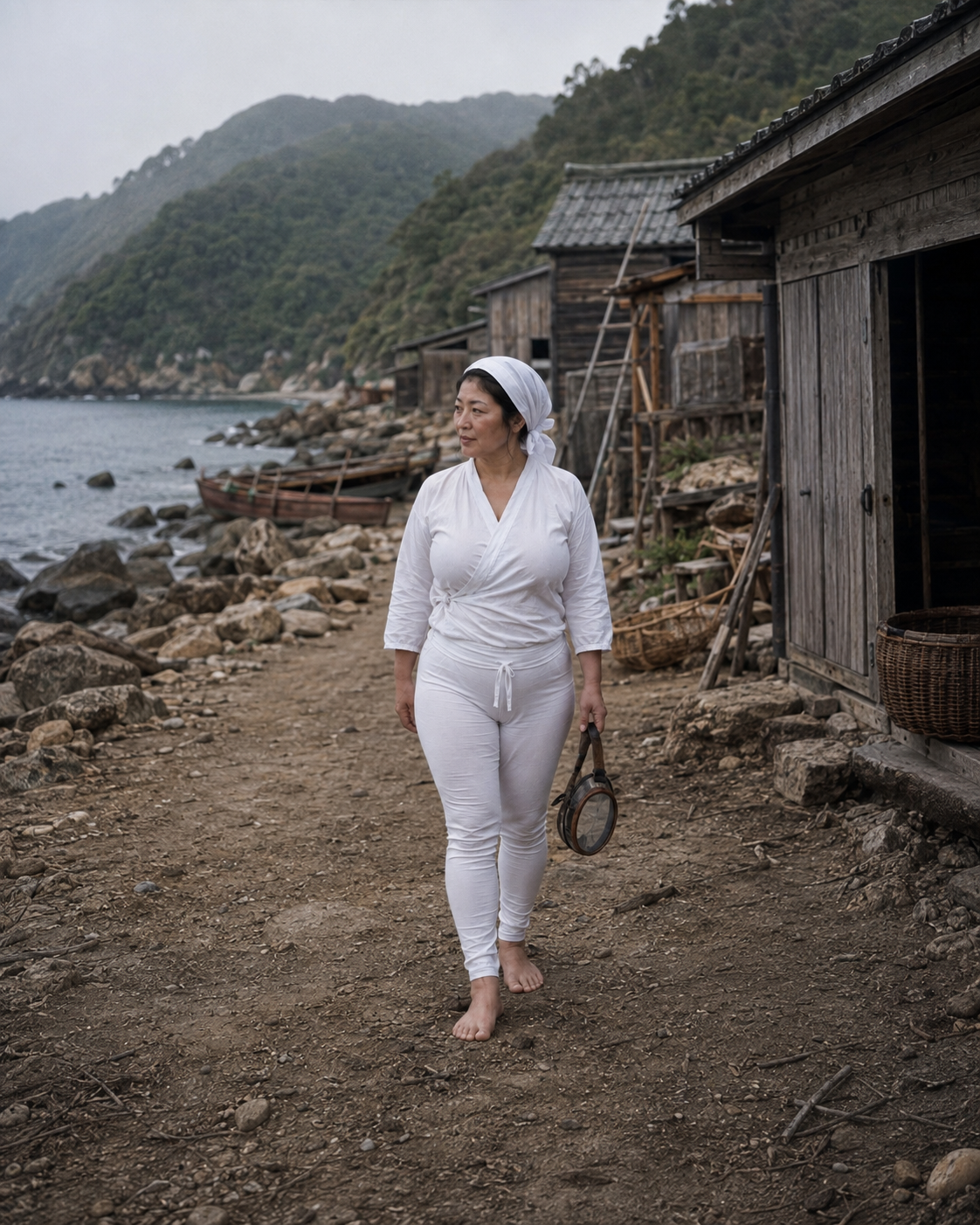
The OCS Visual Archive begins with a person in a particular year and place, then moves outward into work, objects, facilities, sound and everyday culture. Its images are research-based reconstructions, not genuine period photographs.
How to read this archive.
Each record keeps four claim layers separate. FACT covers information supported by sources. INFERENCE is a reasonable conclusion drawn from several sources without direct evidence for one exact scene. RECONSTRUCTION describes visual choices made from the evidence. FICTION covers invented people, dialogue and the private detail of a particular imagined day. The archive links these layers without presenting them as the same thing.
EXPLORE BY ARCHIVE ENTITY
Seven ways into one working world.
PLACEAnori, Mie →A place shaped by ama work.
WORKAma diving →Preparation, dive, recovery and return.
OBJECTKaginomi →A hand tool for gathering.
FACILITYAma hut →Preparation and warming.
PERSONShino Hamasaki →A fictional life inside a researched frame.
EPISODEShino EP01 →The complete working sequence.
Image → context → episode → film → archive.
Begin with Shino’s EP01 or EP02, watch the films, continue through the Kindle library, then return to the archive nodes that explain the year, place, tools and working environment.
A growing English layer.
The English archive opens with the most complete research line now available: 1972 Anori and Shino Hamasaki. It includes the year, place, ama work hub, ama hut, iso-megane, kaginomi and isobue, together with EP01 and EP02. Other Japanese archive records remain available in their original language until they receive a reviewed English counterpart. OCS does not create empty English URLs or false language pairs simply to make the index appear larger.
As translation continues, new English records will enter this same structure. A page appears here only after its historical claims, provenance, internal links and language pairing have been checked.