OCS WORLD / HISTORICALLY INFORMED VISUAL RECONSTRUCTION
WAJIMA · HEGURA ISLAND
1955
A working world built from repeated breaths.
OCS WORLD reconstructs the working environment of ama divers around Wajima and Hegura Island in 1955 using regional historical sources, a direct visual record made on Hegura Island in 1954, and closely dated research.
WATCH FIRST / FILM
Enter the world through the film.
01 / INTRODUCTION
What is being reconstructed?
This project is not simply a portrait of one woman. It treats the island, rocky coast, surface, underwater space, floats, boats, groups of workers and shore-side labor as a single connected environment.
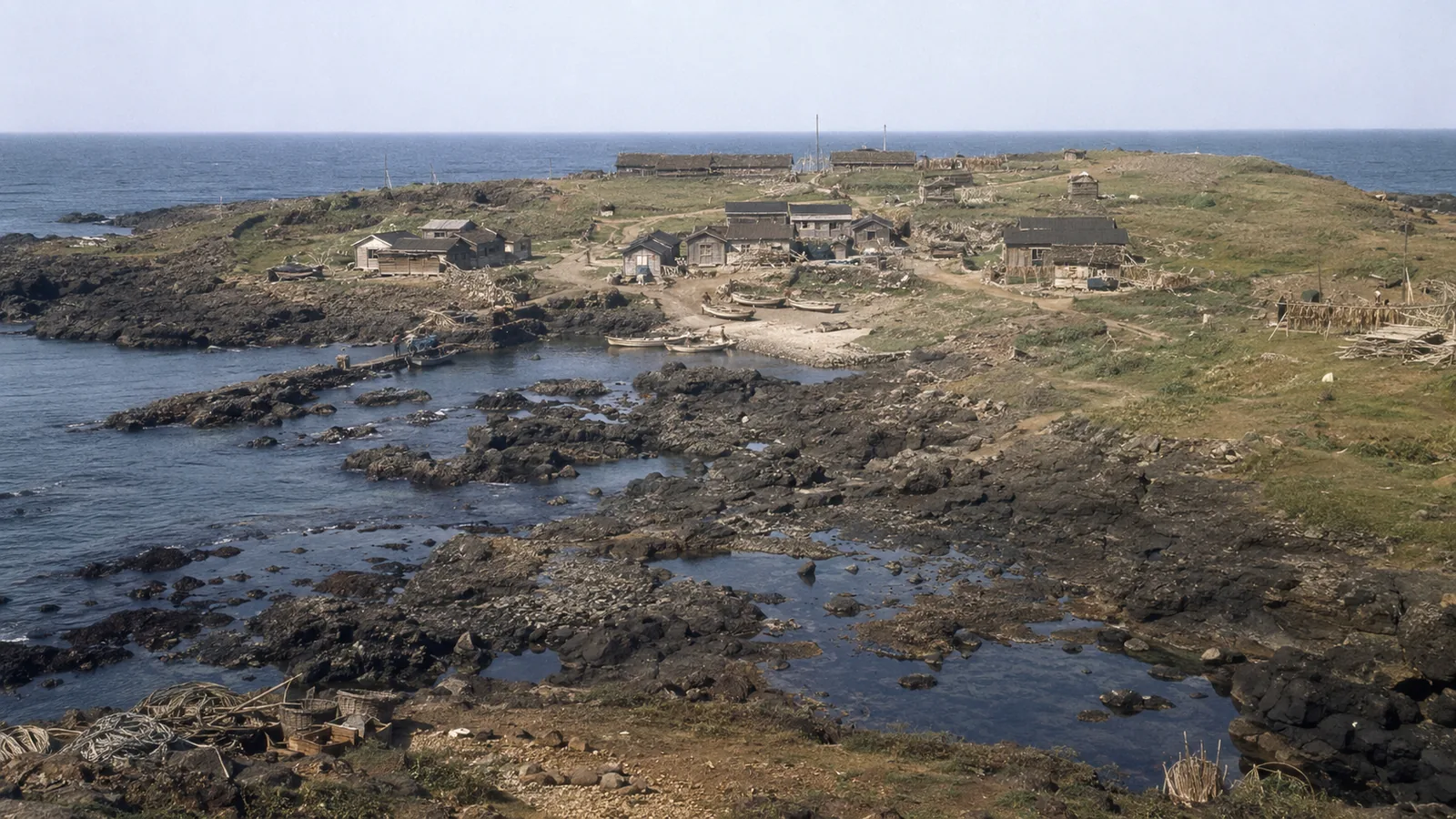
Wajima has a long tradition of women harvesting marine resources through breath-hold diving, and Hegura Island is recorded as one of the major fishing grounds. In July 1954, Fosco Maraini visited Hegura Island and documented ama divers, underwater work, rocks, boats, recovery at the surface and island life. Because that record comes from the same island only one year before our chosen date, OCS gives it greater weight than a generic image of “ama culture.”
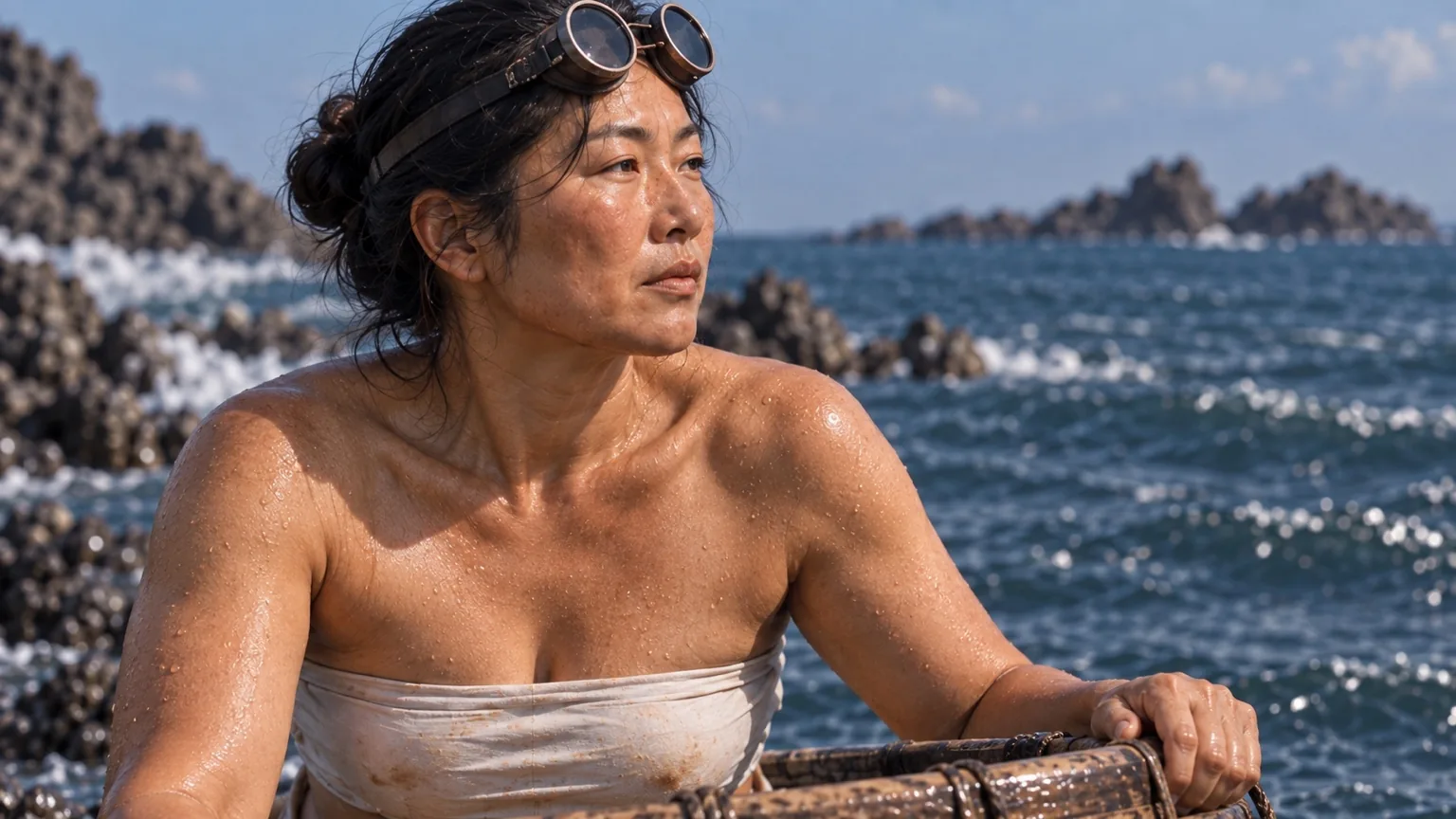
Yoshino, the 35-year-old woman seen in the reconstruction, is fictional. She is not presented as a real historical person from 1955. She is a human entry point into the working world.
02 / THE WORLD
From Wajima to Hegura Island
Historical sources describe seasonal movement from the Wajima area to Hegura Island, known as shimawatari, but that system changed over time. For 1955, OCS does not claim a precise migration schedule, household structure, route, boat type or crew composition unless the evidence closes those questions. The location of Hegura Island and its importance as an ama fishing ground are documented; the exact mechanics of every 1955 journey remain bounded.
03 / ONE DIVE
One dive is one cycle — not the whole day.
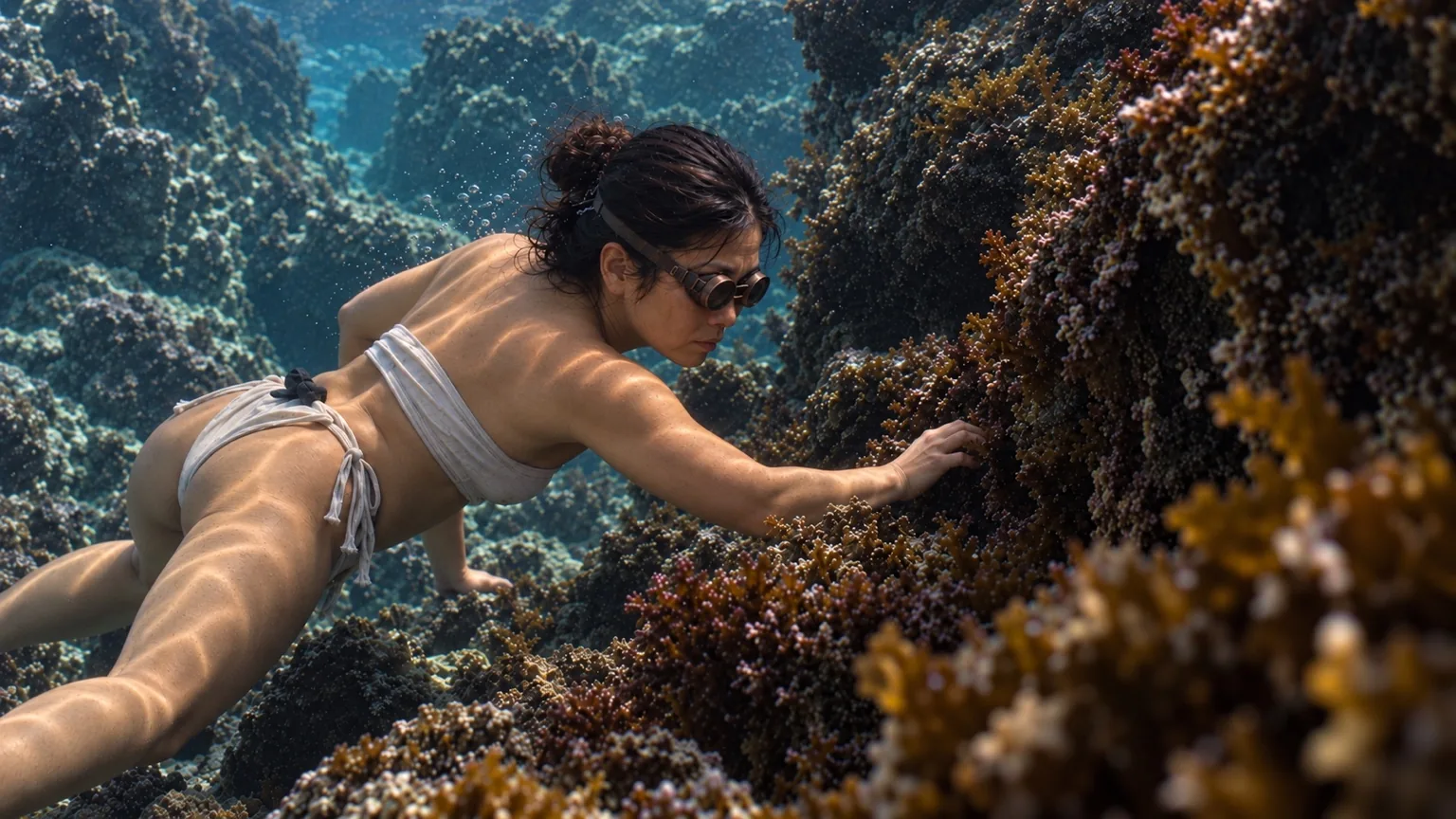
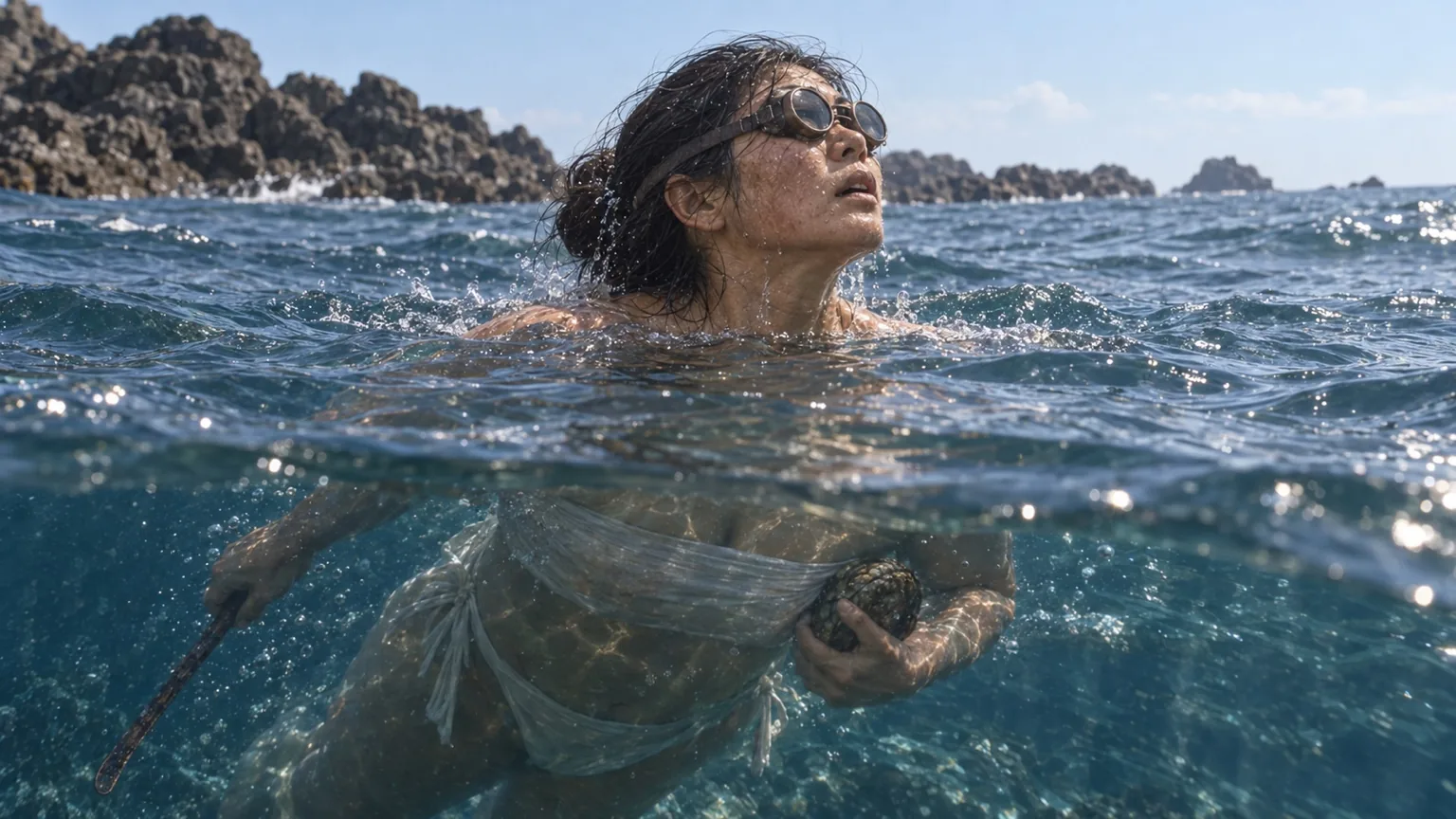
The 1954 Hegura Island record shows repeated dives broken by recovery at the surface and beside boats. Our sequence follows one working cycle: preparation, goggles, descent, searching the rocky seabed, locating catch, release from the rock, ascent, first breath, return to the float and recovery near the boat.
04 / WHAT THE SOURCES SUPPORT
What do we know — and what remains uncertain?
Closely dated sources strongly support a minimal lower-body garment often described as saiji together with goggles, before the widespread adoption of wetsuits. Exact fabric, color, width and tying method remain unresolved. The white chest covering shown in the public reconstruction is a non-historical adaptation, not a claim about 1955 clothing.
The use of underwater goggles is well supported. Their exact frame, lens size, bridge, padding, straps and material in 1955 are not fully established.
Floating tubs or containers are documented within Wajima ama practice for holding catch and supporting short rests. OCS avoids assigning a local 1955 term where it has not been securely verified.
The direct 1954 record supports the role of boats as part of recovery and work at sea. Exact 1955 hull form, engine, crew size, route and division of labor remain unresolved.
Abalone is strongly supported as a major target of Hegura Island ama. The precise species, size and season of any individual animal shown in the reconstruction are not asserted.
Ama work did not end with a solitary underwater moment. Repeated diving, surface recovery and boat-based support form part of the larger system, while the exact number of people and handoff procedures shown on screen are reconstructed.
05 / RECONSTRUCTION RULE
Do not fill gaps in the evidence with visual precision.
Every still and motion sequence is a visual reconstruction. OCS distinguishes between what is documented, what is supported by inference, what is reconstructed for the image, and what remains unresolved. The goal is not to make uncertainty disappear. It is to make the world legible without pretending that every visible detail is a fact.
06 / SOURCES
Key public references
Supports the tradition of women breath-hold divers, Hegura Island as a major fishing ground, goggles, clothing history, tools and the later transition to wetsuits.
A direct visual record of ama divers, underwater work, rocks, boats, sea and island life one year before the setting of this reconstruction.
Provides historical discussion of Hegura Island ama clothing and goggles across the mid-20th century.
CONTINUE EXPLORING
Go deeper into the ama world.
Start with the broader ama guide, compare a different regional world in Anori, or return to the film and watch the working rhythm again.