OCS LENS × WORLD / MIE / 1972
ANORI 1972
× KUZAKI 1972
Same year. Same prefecture. The same broad tradition of ama diving. Yet the working worlds were not the same.
In Anori, white workwear remained visible. In Kuzaki, black wetsuits had entered the working environment. That difference was more than clothing: a wetsuit could change how long a diver could remain in cold water and therefore alter the conditions of work itself.
WATCH / OCS LENS


THE POINT
There was never just one “ama” model.
Ama communities shared a core of breath-hold diving, reading the sea and harvesting marine resources. But fishing days, time limits, grounds, equipment and community rules could differ from place to place. The point of comparison is not to decide which community was “normal.” It is to make the regional differences visible.
THE WETSUIT CHANGED THE CONDITIONS
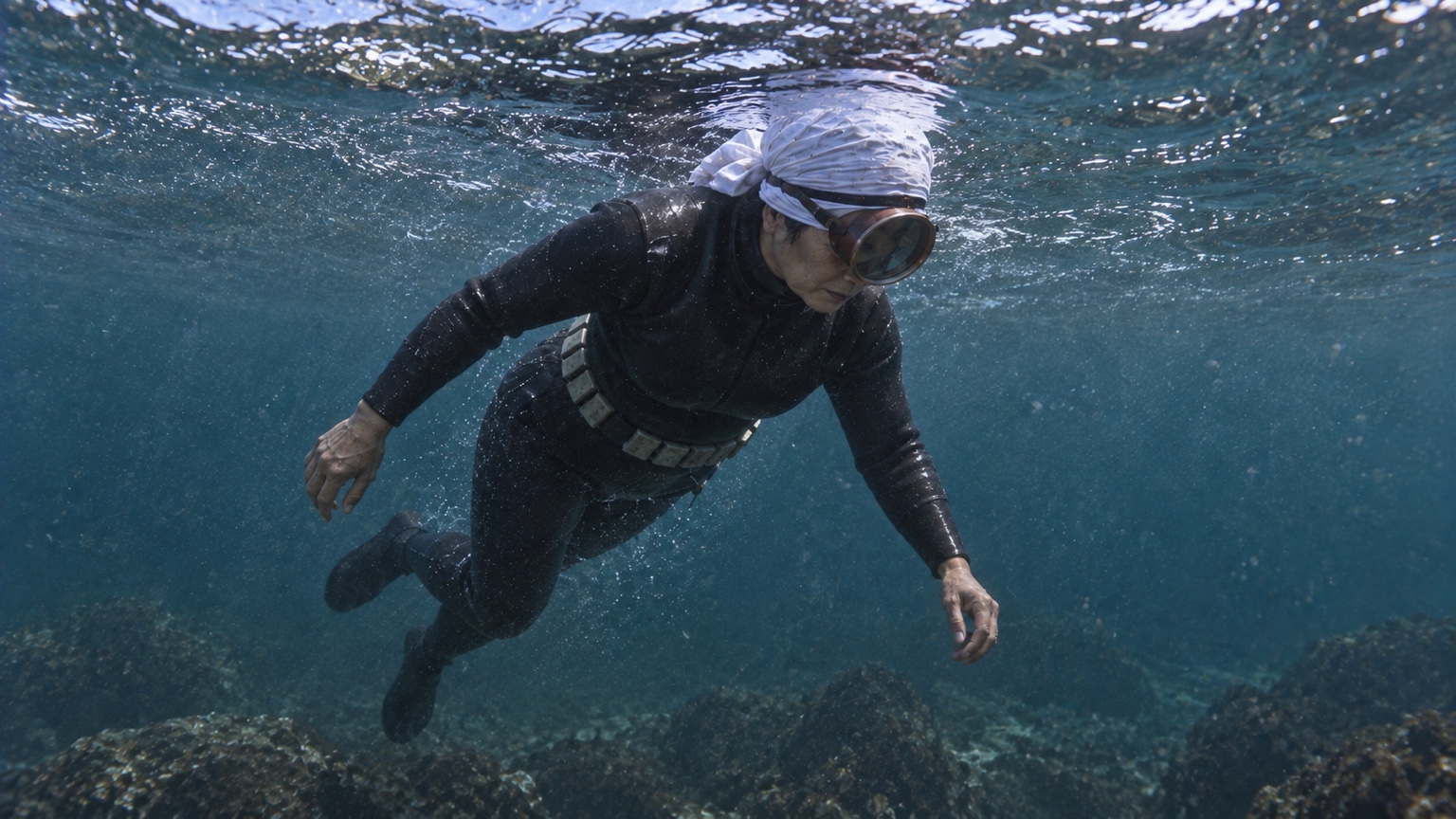
The black wetsuit in Kuzaki was not simply a visual difference. By reducing heat loss, wetsuits could change a diver’s tolerance of cold water and potentially affect the duration and conditions of diving. Placing Kuzaki beside Anori makes the technological transition visible at the level of the body.
WHY DIDN’T NEW TECHNOLOGY SPREAD IN ONE UNIFORM WAY?
Technology enters a community through rules.
A new tool does not arrive in an empty space. Fishing communities already have rules about access, timing, harvest pressure and resource management. A wetsuit can alter the physical limits of work, which means its adoption can also affect the relationship between individual efficiency and collective control of the fishing ground.
OCS LENS therefore treats the wetsuit not as a simple story of “old versus new,” but as a point where body, technology, resources and community governance meet.
SIDE BY SIDE
Two entrances into 1972.
WHY THIS COMPARISON MATTERS
A world becomes three-dimensional when you compare it.
If we look only at Anori, its visual world can begin to feel like the standard image of ama culture. Put Kuzaki beside it, and the shared bodily technique separates from the local rules, technologies and material conditions. OCS LENS explains those differences. OCS WORLD tries to make you feel them.
CONTINUE EXPLORING