OCS WORLD / HISTORICALLY INFORMED VISUAL RECONSTRUCTION
JEJU ISLAND
1932
One breath. Black basalt. The working sea.
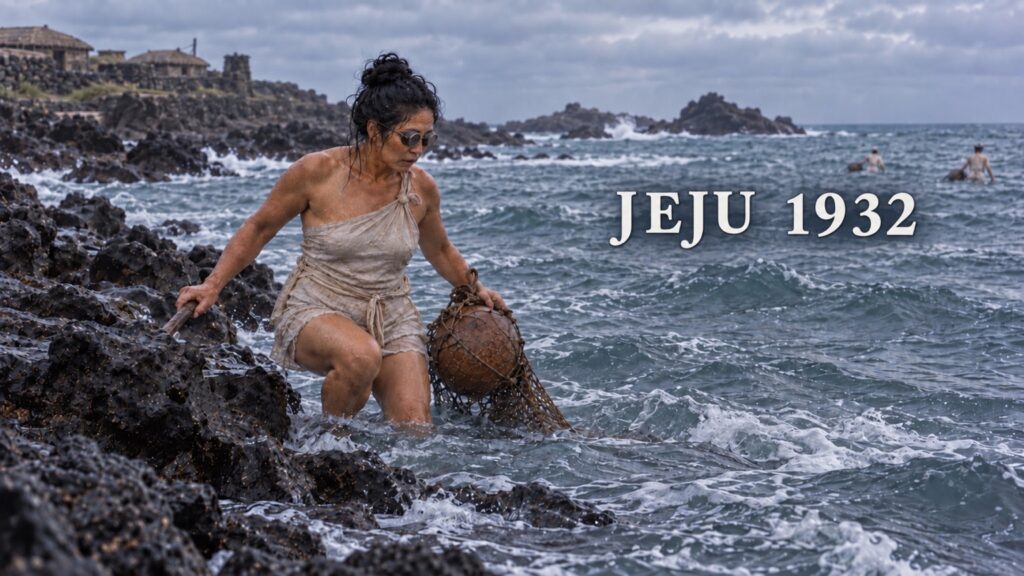
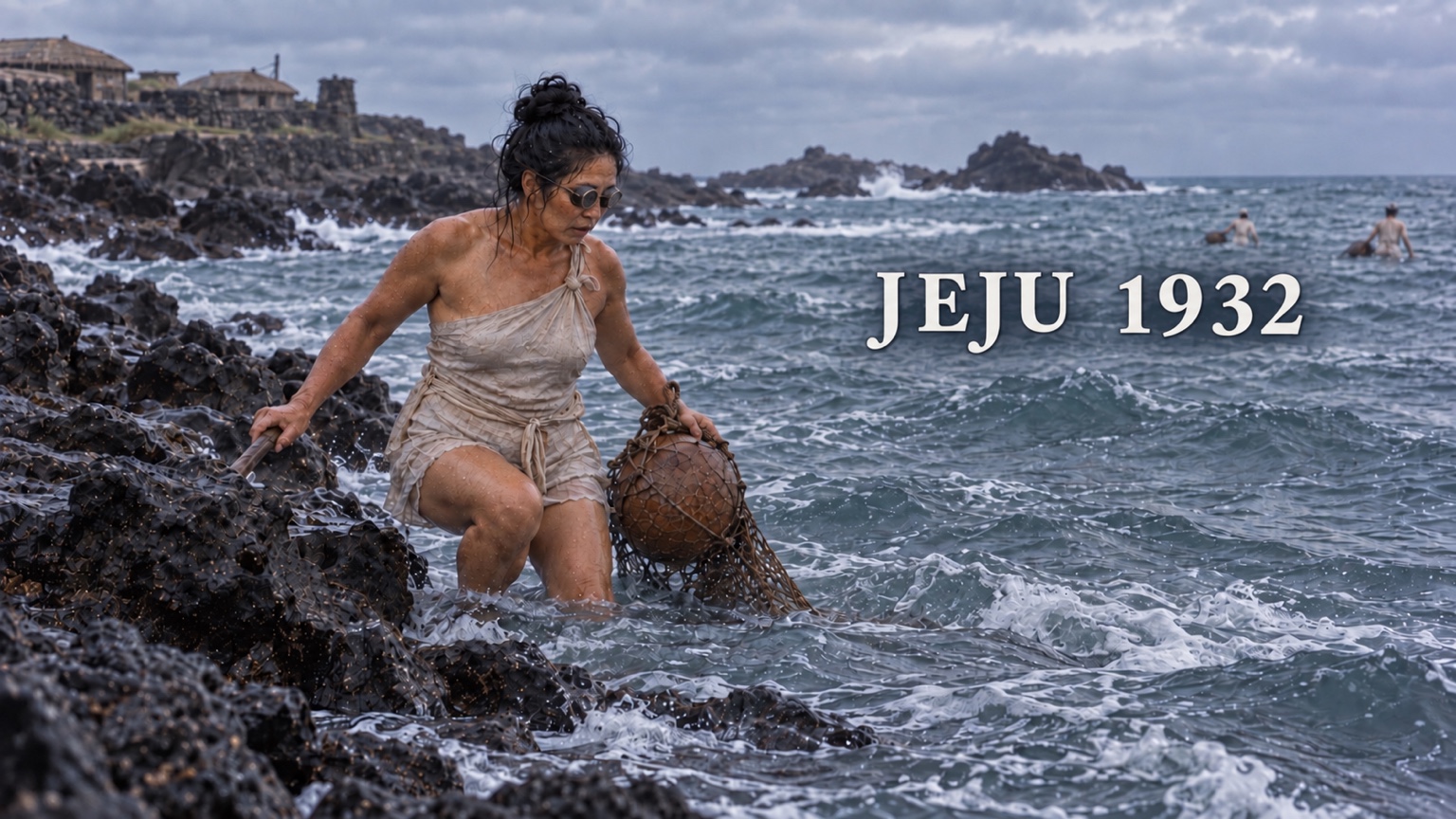
OCS WORLD reconstructs one working cycle of Jeju haenyeo in 1932: leaving the village, crossing volcanic rock, entering cold water, descending on one breath, working the stone, surfacing for air, and returning the soundscape to the sea.
WATCH FIRST / FILM
One Breath at a Time
YouTube release: September 19, 2026 · 20:00 JST
01 / WHAT IS A JEJU HAENYEO?
A breath-hold diving culture shaped by the island.
Jeju haenyeo are women divers who harvest marine resources without underwater breathing apparatus. Their work depends on breath control, knowledge of the sea and marine life, repeated short dives, recovery at the surface, and community knowledge passed between generations.
The culture of Jeju haenyeo was inscribed on UNESCO’s Representative List of the Intangible Cultural Heritage of Humanity in 2016.
02 / ONE WORKING CYCLE
The dive is only one part of the job.
The sea is still a destination. The body remains in the land world.
Wet cloth, unstable rock, float and net bring the body into the working coast.
Human breathing disappears. Water pressure and underwater movement own the soundscape.
A simple iron harvesting tool applies pressure at the rock; the hand takes over at the final moment.
For one brief moment, the body becomes the clearest human sound.
The human event recedes. Wind, water and coast retake the frame.
03 / MATERIAL WORLD
Cloth, float, net, goggles and iron.
Traditional haenyeo workwear included cotton garments such as muljeoksam for the upper body and mulsojungi for the lower body. Rubber diving suits spread from the 1970s onward.
The tewak provides flotation at the surface; older versions used gourds. A net bag, mangsari, holds the catch.
Diving goggles became established in the twentieth century. Iron tools such as bitchang and kkakkuri are used to remove or reach catch on and between rocks.
04 / RECONSTRUCTION RULE
Do not make uncertainty disappear.
OCS separates four layers: documented fact, supported inference, visual reconstruction, and fictional continuity. Clothing traditions, diving practice and tools may be historically supported, while an individual face, exact pose, camera position and the continuous sequence of one specific day remain reconstructed.
05 / COMPARE THE WORLDS
Women free divers — different regional worlds.
Jeju haenyeo and Japanese ama both include women who harvest by breath-hold diving, but they are not one undifferentiated tradition. OCS keeps the regional histories, languages, tools, institutions and work systems distinct.
06 / SOURCES
Key public references
Breath-hold diving, marine knowledge, community transmission and the 2016 intangible heritage inscription.
Traditional cotton workwear, tewak, mangsari, goggles and harvesting tools.
Traditional clothing and tools, including the later shift to rubber diving suits.