TOKYO / SHIBUYA / 1996 / EVERYDAY LIFE
Shibuya in 1996
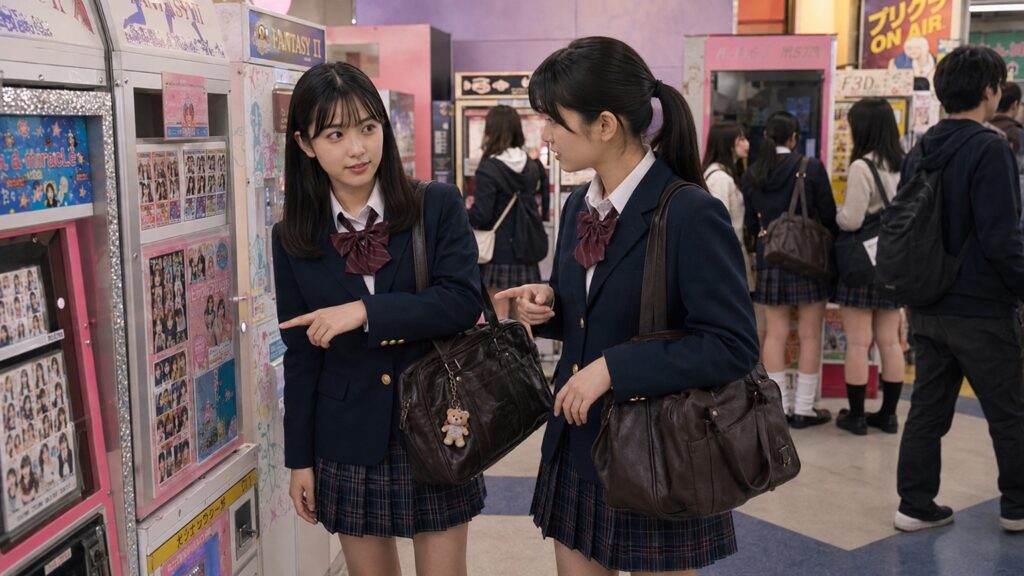
Shibuya in 1996 was already a dense commercial and youth district, but everyday movement still depended on physical interfaces: paper train tickets, pagers, CD shelves, early purikura booths, karaoke rooms and public streets rather than one smartphone screen.
Why Shibuya is useful for reading 1996 Japan
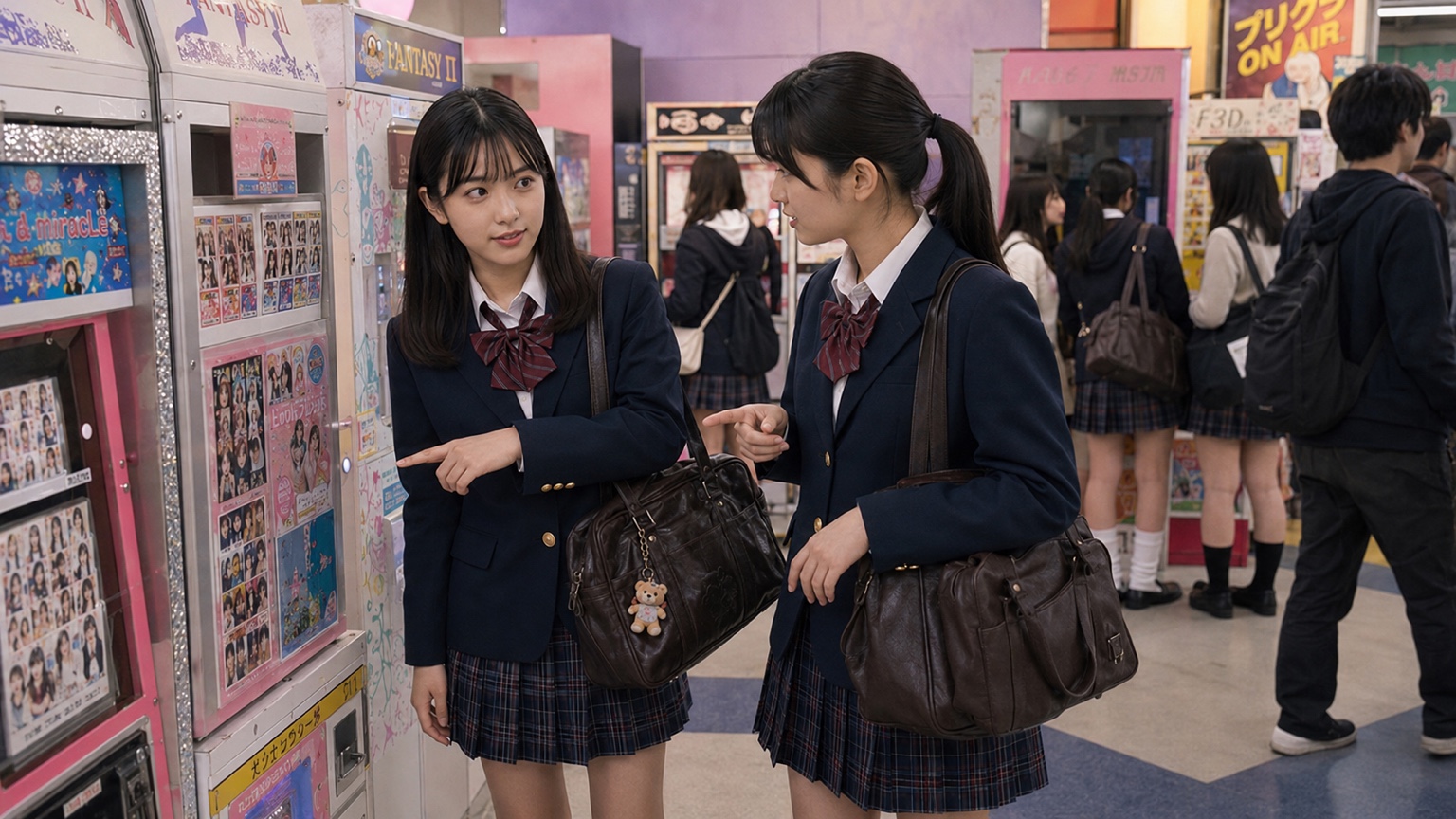
Shibuya makes the material culture of the mid-1990s easy to see because transport, communication, music, photography and after-school leisure intersect in one urban route. The point is not to turn the district into a stereotype of neon youth culture. OCS uses ordinary transitions—station gate, shop shelf, booth, microphone, street crossing—to show how a day actually moved.
Five physical interfaces of Shibuya in 1996
Bought, held, inserted and returned by station systems.
Portable messages without a full modern chat interface.
Music discovery organized around shelves, cases and physical purchase.
A social photograph becomes a small printed sticker to carry and exchange.
Dedicated rooms, CRT-era screens, song systems and wired microphones.
One fictional student, one researched route
Mio Kamiya is a fictional 17-year-old used as a human doorway into this material world. Her route connects home, station, school and Shibuya without claiming that one exact historical student lived this day. The objects, technologies and types of space are researched; her face, conversations, private actions and exact sequence remain reconstruction or fiction.
Shibuya before the smartphone
What feels most different is not that the city lacked technology. It was full of specialized technology. Communication, photography, music discovery, ticketing and entertainment each occupied a different device or place. That separation shaped movement: a message might arrive on a pager, a reply might wait, a photograph required a booth, and music discovery required entering a shop.
This is the core of the OCS approach to 1996: reconstruct the relationship between body, object and place, not just the visual surface of the decade.
Continue through 1996 Tokyo.
Follow the complete day with Mio, then widen the frame to the decade.
FAQ
What was popular in Shibuya in 1996?
OCS focuses on everyday interfaces visible in its 1996 route: paper rail tickets, pagers, CD shopping, early purikura and karaoke. These are not presented as a complete inventory of the district.
Was Shibuya already modern in 1996?
Yes in many visible ways, but the interface of daily life was more distributed across physical objects, shops and dedicated machines than it is today.
Is Mio Kamiya a real person?
No. She is a fictional character placed inside a researched 1996 Tokyo material world.