HEISEI JAPAN / 1990s / EVERYDAY LIFE / MATERIAL CULTURE
1990s Japan
Before smartphones absorbed tickets, messages, cameras, music and maps into one screen, everyday life in Japan moved through a dense world of physical objects and dedicated machines. The OCS archive enters that decade through a winter inn in 1990 and an ordinary Tokyo day in 1996.

The 1990s were both familiar and physically different.
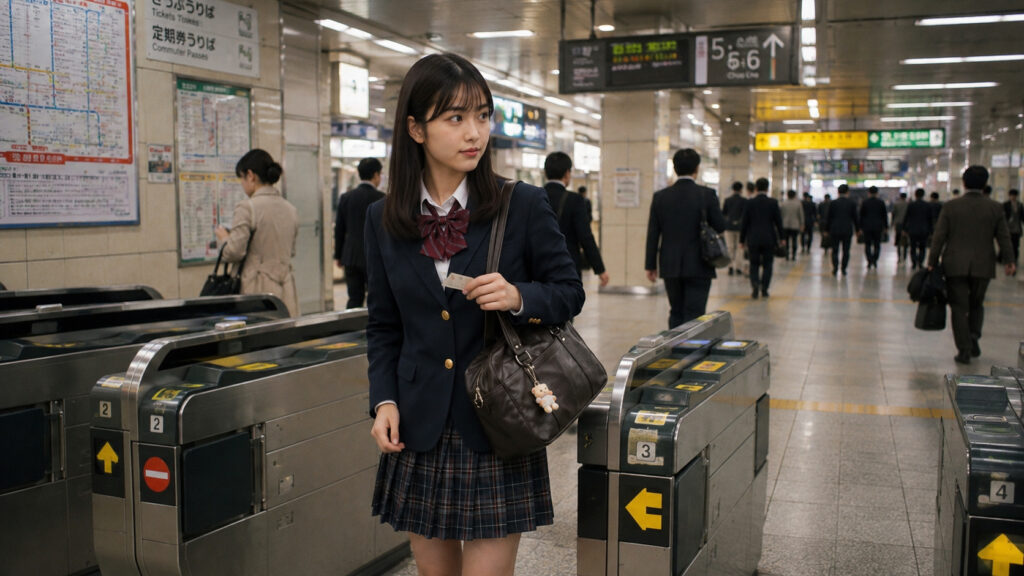
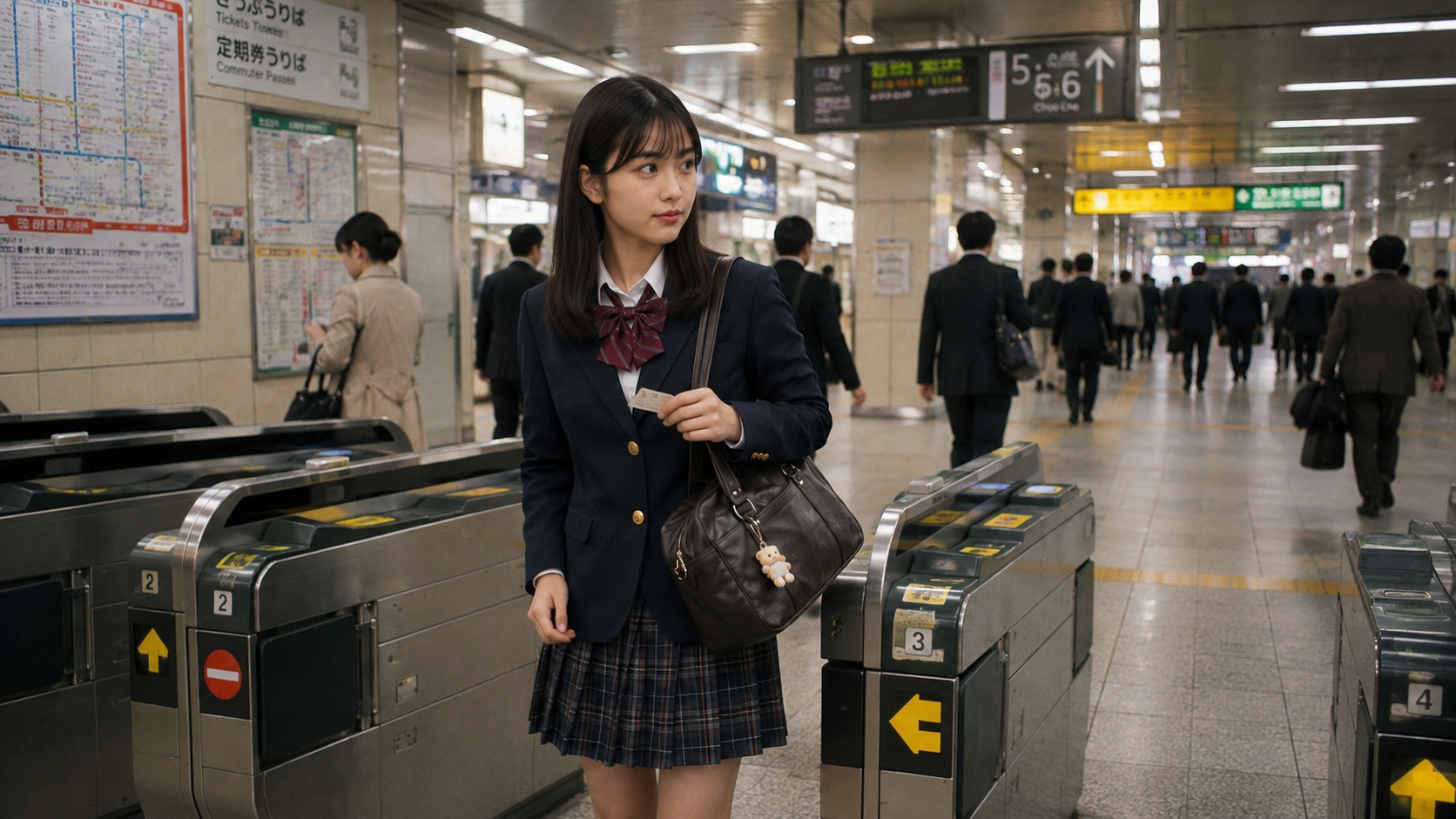
Many places in 1990s Japan already looked recognizably modern: automatic ticket gates, convenience-oriented urban services, karaoke rooms, consumer electronics and dense rail networks were part of daily life. What changed later was the interface. Tasks that now happen on a phone were distributed across paper tickets, pagers, public phones, printed photographs, CD cases and purpose-built machines.
OCS reconstructs those interfaces because they shape behavior. Holding a ticket changes how a person moves through a station. A pager changes when and where a message can be answered. A photo-sticker booth turns an image into a small physical object rather than an endlessly shareable file.
1990: a snow-country inn in Shinshu
The Yoshino Minase archive begins the decade away from Tokyo. Its material world is a wooden inn, tatami, winter light, guest clothing, heating, snow outside the window and the routines of arrival and departure. The point is not to claim one ryokan represents all travel in 1990. It is to make one temporary living space legible through ordinary actions.
Explore Yoshino Minase — Snow Inn in Shinshu, 1990 for the complete record.
1996: Tokyo before the smartphone
The Mio Kamiya archive follows one fictional high-school student through home, station, school, Shibuya and back again. Six material doors define the day: a paper railway ticket, a pager, a CD shop, early purikura, communication karaoke and the genkan at home.
These details are useful because they connect technology to movement and social behavior. A pager receives information but does not replace the place where a response happens. A CD shop makes music discovery spatial. Purikura creates a printed token. Karaoke requires a dedicated room, screen and microphone.
Open Mio Kamiya — A Day in Tokyo, 1996 and follow the complete route.
Five everyday interfaces of 1990s Japan
Paper train tickets
Bought, held, inserted and collected by station systems.
Pagers →
Portable communication without a full modern messaging interface.
CD shops
Music discovery organized around shelves, cases and physical purchase.
Purikura →
A social photograph becomes a printed sticker to carry and exchange.
Karaoke rooms
Dedicated social spaces shaped by screens, song systems and wired microphones.
Why reconstruct ordinary life?
Popular images of 1990s Japan often concentrate on spectacle: neon Tokyo, fashion tribes, the bubble economy or famous consumer electronics. Those subjects matter, but ordinary routines are where a period becomes usable as history. Shoes at an entrance, a ticket at a gate, a room heater, a shop shelf or a paper photograph can reveal how a person actually moved through a day.
OCS therefore treats nostalgia as a starting point, not the evidence. The archive marks what is historically supported, what is inferred, and what is reconstructed for visual continuity.
Explore the decade through two lives.
Move between winter travel in 1990 and a student’s Tokyo in 1996, then compare the decade with OCS records from the 1970s.
1990 / Shinshu → · 1996 / Tokyo → · 1970s Japan → · Visual Archive →
About the reconstructions
Yoshino Minase and Mio Kamiya are fictional characters. The specific private days shown by OCS are reconstructed visual narratives. Period objects, locations and systems are researched and constrained, but the images are not presented as genuine documentary photographs. Read the OCS Historical Reconstruction Standard.
FAQ: everyday life in 1990s Japan
What was Japan like before smartphones?
Many everyday tasks were spread across separate physical objects and machines: paper rail tickets, pagers, public phones, CD shops, printed photographs, maps and dedicated karaoke systems. The difference was not simply older technology; it changed how people moved, waited and communicated.
Were pagers popular in 1990s Japan?
Pagers became an important part of youth communication in the 1990s before mobile phones absorbed messaging into a single personal screen. The OCS 1996 Tokyo reconstruction uses the pager as one material doorway into that changing communication culture.
Where can I explore 1990s Japan in the OCS archive?
Enter a winter trip through Shinshu in 1990, then compare it with Tokyo in 1996. You can also move back to 1970s Japan to compare the material systems of two decades.