SHOWA JAPAN / 1970s / EVERYDAY LIFE / WORK
1970s Japan
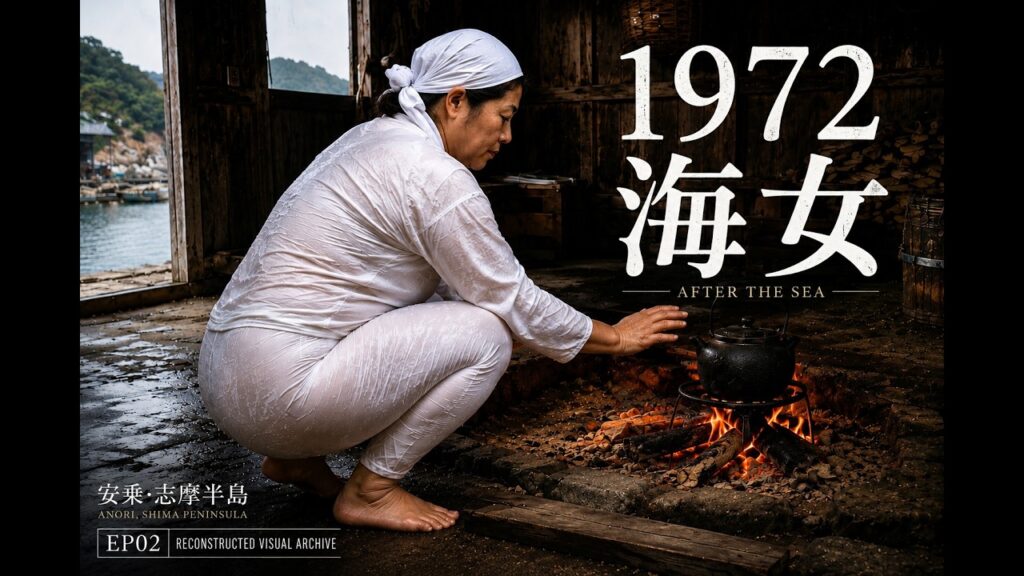
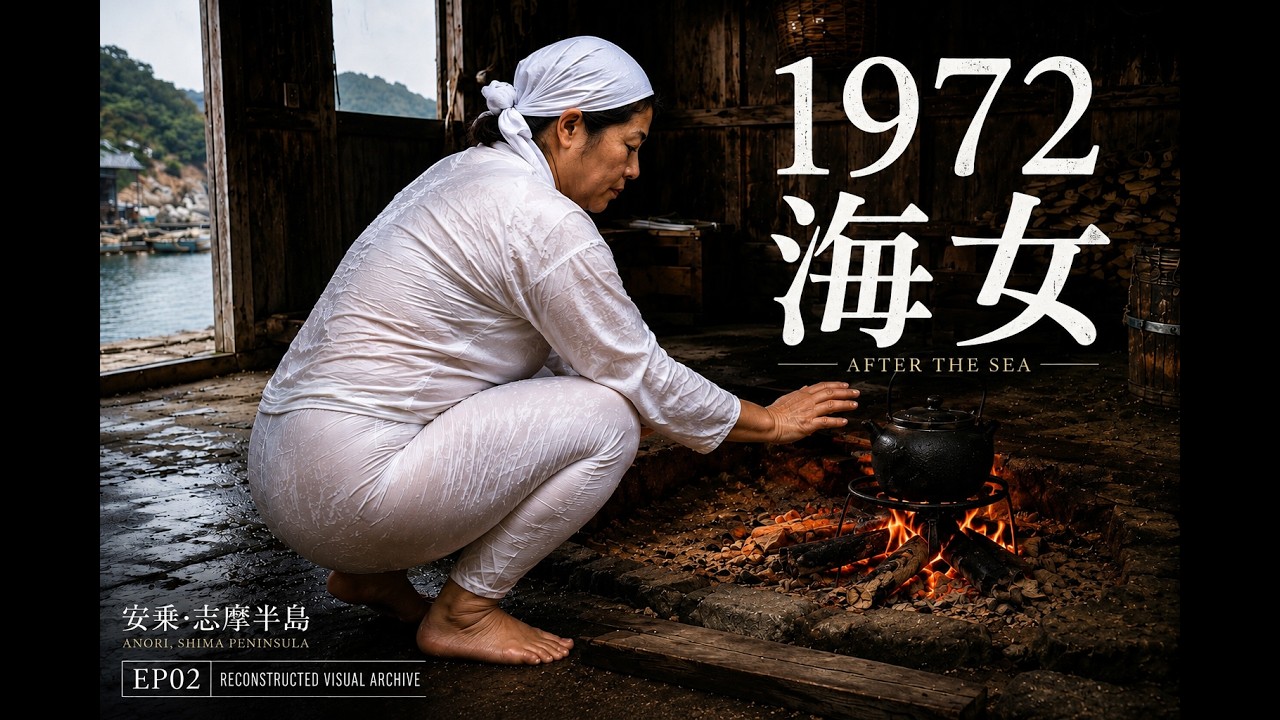
What did everyday Japan feel like in the 1970s? OCS approaches the decade through specific lives and working systems rather than a single nostalgic image. Two current archive doors are 1972 Anori, where an ama diver works at sea, and 1979 Haneda, where a flight attendant moves through an airport shift.
There was no single “1970s Japan.”
The decade contained coastal work, urban expansion, mass transport, tourism, aviation, changing consumer culture and many different household realities. A visual archive can easily flatten these differences into a few familiar colors and objects. OCS takes the opposite route: begin with a constrained place and activity, then expand outward only when the evidence supports it.
The result is not a claim that two fictional women represent the entire decade. They are entry points into two very different systems: one rooted in long-lived coastal labor, the other in modern transport and service infrastructure.
1972: Anori, Mie — the sea as workplace
In the 1972 Anori archive, the working day is organized around breath-hold diving, the route to the water, simple gathering tools, surface recovery and the return to the ama hut. The material world includes iso-megane, kaginomi, floats, work clothing and the breathing sound known as isobue.
Ama Divers in Japan gives the broader cultural frame. Shino Hamasaki gives the human doorway, while 1972 Japan keeps the reconstruction tied to a specific year.
1979: Haneda — work inside a transport system
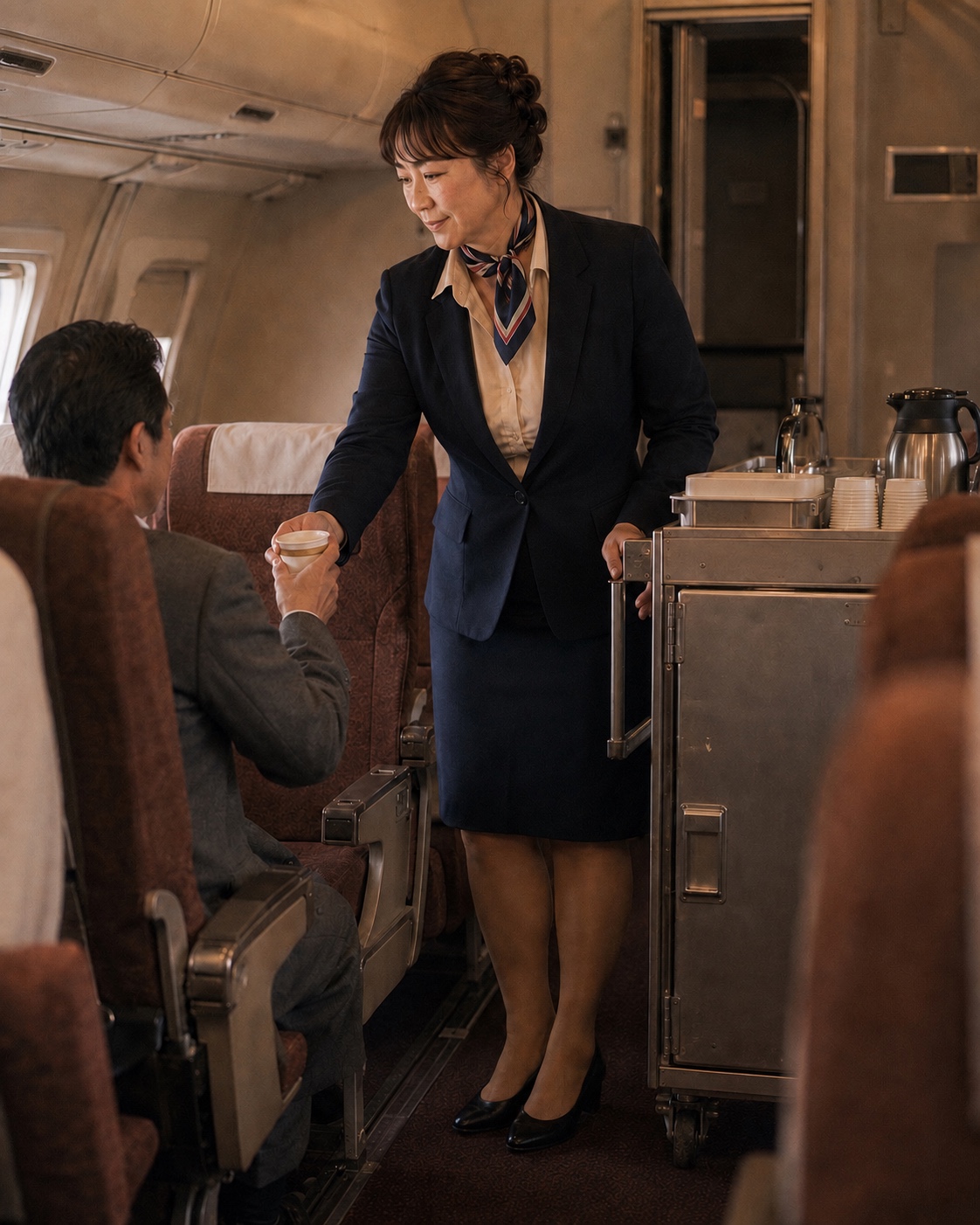
Seven years later, another OCS archive line enters the decade through Haneda Airport. Misaki Todo is a fictional flight attendant whose working route begins before the aircraft: Tokyo Monorail, terminal, staff space, briefing, cabin, galley and passenger service.
The focus is not simply the uniform. A workplace becomes historically legible when transport, architecture, equipment, service routines and body movement are connected. Explore Misaki Todo — Flight Attendant at Haneda, 1979.
How everyday technology changes the feel of a decade
Many technologies that now disappear into digital interfaces were physical systems in the 1970s. Travel required visible tickets, counters, signs and staffed spaces. Workplaces depended on paper records, fixed equipment and repeated hand movements. Clothing was not merely style; it was part of occupational practice, weather protection or institutional identity.
This is why the OCS archive pays attention to small objects and ordinary transitions. A historically useful image needs more than a period-looking room. It needs the correct relationship between a person, an object, a task and a place.
Explore 1970s Japan by entry point
From the 1970s to the 1990s
The archive continues into 1990 Shinshu and 1996 Tokyo, where paper tickets, pagers, purikura, karaoke and changing travel culture create a very different material world.
About the reconstructions
Shino Hamasaki and Misaki Todo are fictional adult characters. OCS uses research to constrain year, location, tools, facilities and working routines, while keeping invented faces, exact private actions and camera positions clearly inside the reconstruction layer. Read the OCS Historical Reconstruction Standard for the full method.
FAQ: everyday life in 1970s Japan
What was everyday life in Japan like in the 1970s?
There was no single experience of the decade. Daily life differed sharply between coastal communities, large cities and different kinds of work. OCS therefore uses specific case studies rather than presenting one generic retro image of Japan.
Was the 1970s part of the Showa era?
Yes. The entire 1970s fell within the Showa era. In the OCS archive, the decade is approached through material culture and ordinary systems such as work equipment, transport, clothing, paper records and workplace routines.
Where can I explore specific 1970s examples?
Start with ama divers in Japan and the 1972 Anori archive, then compare them with flight attendant work at Haneda in 1979.