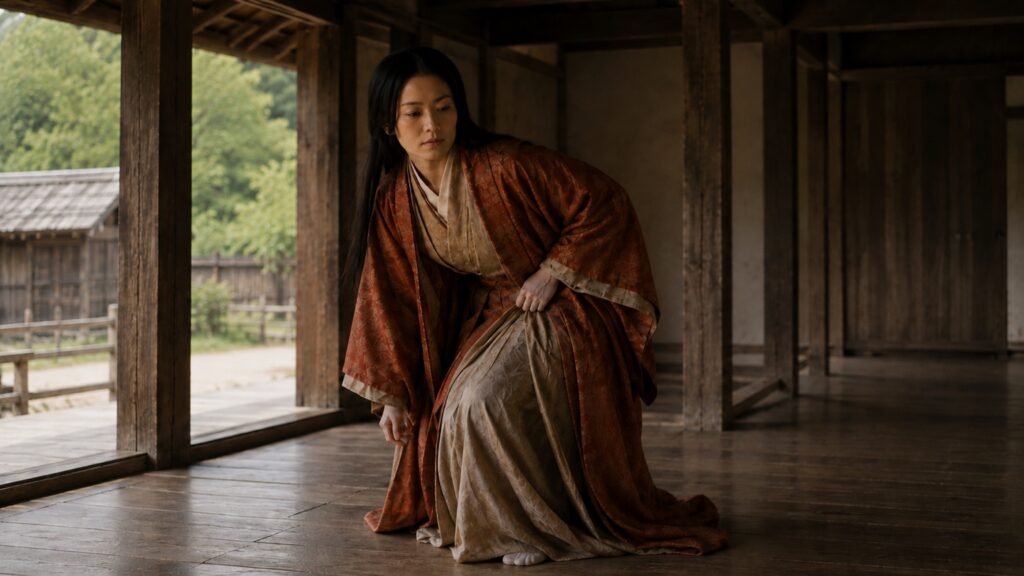
SENGOKU JAPAN / OICHI / ODA NOBUNAGA / ODANI / 1570
Oichi was the younger sister of Oda Nobunaga and the wife of Azai Nagamasa. In 1570, the Oda–Azai alliance broke into open conflict. OCS enters that political world from the household side: roads, thresholds, messages, waiting, movement and ordinary life around Odani.
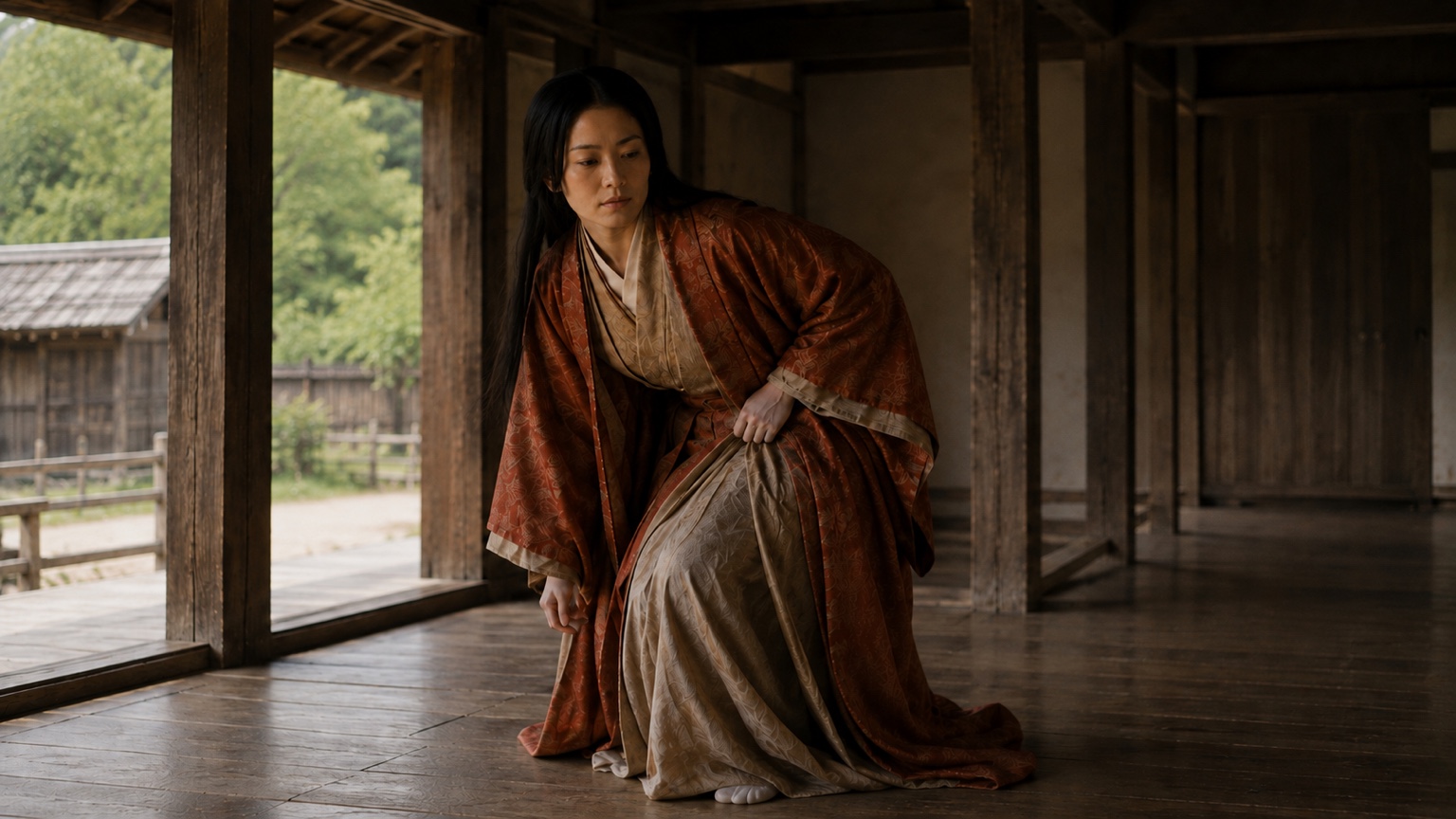
Who was Oichi?
Oichi is one of the best-known women connected to Japan’s Sengoku period. She was born into the Oda family and is remembered as the younger sister of Oda Nobunaga. Through marriage to Azai Nagamasa, lord of the Azai clan, she stood inside a political alliance that linked two powerful houses and later became a point of conflict between them.
Oichi and Nagamasa had three daughters who later became historically important in their own right: Chacha, Hatsu and Gō. Oichi later married Shibata Katsuie after Nobunaga’s death. Her life therefore connects several of the central political families of the late sixteenth century, but OCS does not reduce her to a genealogical bridge between famous men.
Why 1570 matters
In 1570, the relationship between Oda Nobunaga and Azai Nagamasa broke down as the Azai sided against Nobunaga during his conflict with the Asakura. The struggle continued for several years and ended with the fall of Odani Castle in 1573.
The OCS episode stays deliberately at the beginning of that rupture. It does not turn Oichi into a battlefield commander, invent a secret conference with Nobunaga or treat a famous later legend as confirmed private fact. The question is smaller: how might major political pressure become visible inside an inhabited household before history reaches its dramatic endpoint?
Odani Castle and the world below it
Odani Castle was the stronghold of the Azai family in northern Ōmi, in present-day Shiga Prefecture. Japan Tourism Agency material describes a mountain fortress spread across ridges above the surrounding valley and settlement. The surviving site is now a historic ruin rather than an intact sixteenth-century castle.
For reconstruction, that geography matters. OCS does not imagine “the castle” as one isolated keep. Roads, lower settlement areas, residence zones, slopes and movement between domestic and defensive space form one connected landscape. The episode therefore uses thresholds and routes as historical material, not merely as scenery.
What is historical, and what is reconstructed?
Historical frame
Oichi’s family relationships, Azai Nagamasa, Oda Nobunaga, the 1570 rupture and Odani as the Azai center.
Material evidence
Topography, settlement relationships, residence vocabulary, roads, documents, vessels, tools and period material culture.
Visual reconstruction
Oichi’s exact appearance, gestures, private rooms, exact sequence of one day, camera position and many scene-specific details.
Six doors into Oichi’s 1570 world
Mountain defense and inhabited lower spaces belong to one connected landscape.
Architecture becomes a boundary between household routine and changing conditions outside.
People, goods and information move through routes below the castle.
Political pressure may first appear as altered movement, waiting, work and access.
Documents make information material, but the episode does not claim its prop is a surviving letter to Oichi.
Family, alliance and conflict overlap around one woman’s domestic world.
WATCH THE VISUAL EPISODE
Oichi — Odani, 1570
FAQ
Was Oichi really Oda Nobunaga’s sister?
Yes. Oichi is historically known as Nobunaga’s younger sister and as the wife of Azai Nagamasa.
Did Oichi live at Odani Castle?
Oichi was married into the Azai family, whose stronghold was Odani. The OCS reconstruction uses the wider Odani residential and settlement world as its setting while avoiding claims about one exact surviving private room.
Is the famous “bag of beans” warning story confirmed?
The story is widely repeated, but OCS does not use it as a confirmed private event. The 1570 episode keeps its message material deliberately non-specific and separates attested history from later tradition.
Research references
For the broader historical frame, useful English-language starting points include official Japanese tourism material on Odani Castle and Aichi Prefecture’s overview of Sengoku-era heroines. OCS then applies its own evidence / inference / reconstruction separation to the visual episode.
Japan Tourism Agency — Odani Castle Sengoku Historical Museum · Aichi Now — Oichi · OCS Historical Reconstruction Standard
Continue through the archive
Visual Archive of Japan · Ama Divers in Japan · 1970s Japan · 1990s Japan