JAPAN / AMA / BREATH-HOLD DIVING / MIE
Ama Divers in Japan
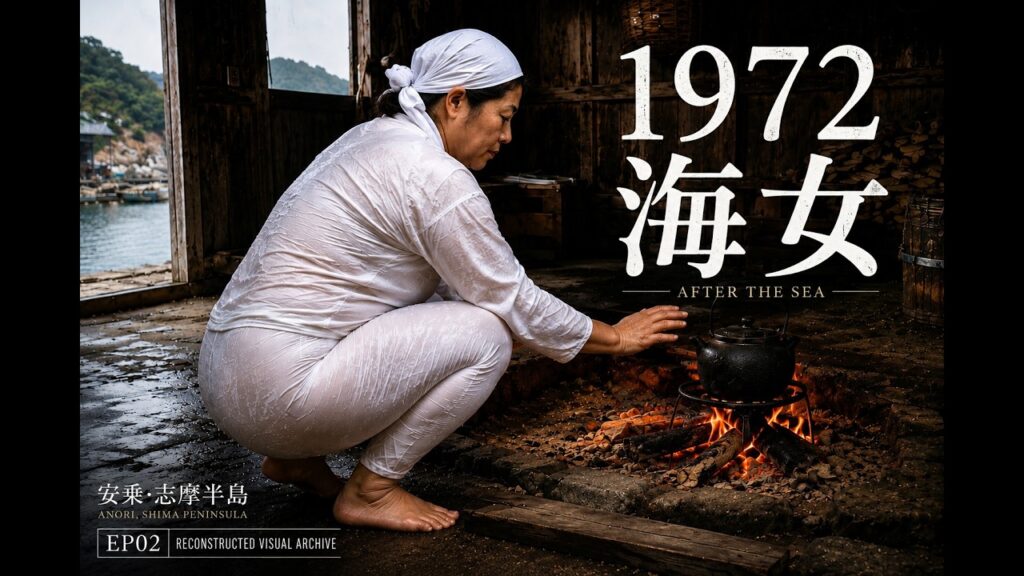
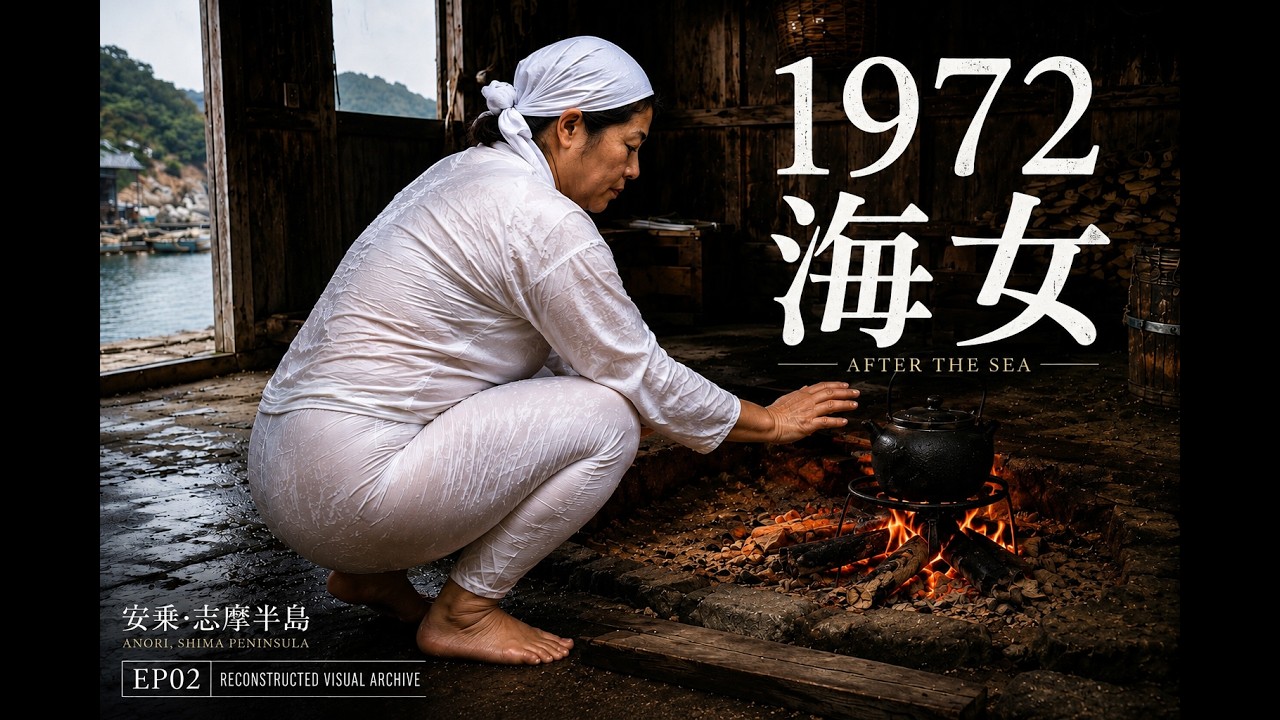
Ama are traditional breath-hold divers associated especially with coastal communities in Japan. This guide enters that history through Anori in Mie Prefecture and the OCS reconstruction of an ama working day in 1972.
What is an ama diver?
The word ama is used for professional or traditional divers who gather marine products by holding their breath rather than working from a scuba air supply. In Japanese cultural history, ama are strongly associated with women who dive for shellfish and seaweed, although male ama have also existed in some regions and periods.
Official Japan Heritage material for Toba and Shima describes ama fishing as a long-lived free-diving tradition and identifies the region as one of the most important surviving centers of the culture. OCS uses that broader history as a research frame, then narrows the camera to one place, one year and one reconstructed working life.
Ama work is a system, not a single dive.
Preparation
Clothing, goggles, tools and the route from hut to shore or boat are part of the working sequence.
Descent and gathering
The diver works underwater on one breath, locating and gathering marine products with simple hand tools.
Ascent and breathing
Recovery at the surface is central to the rhythm of repeated dives. The distinctive breathing sound known as isobue is one of the best-known sensory markers of ama work.
Warming and return
The working day continues after the water. The ama hut, warmth, conversation and recovery belong to the same material system.
Tools and material culture
OCS separates the romantic image of the diver from the specific objects that make work possible. In the 1972 Anori archive, those objects include iso-megane diving goggles, the kaginomi hand tool, floats, catch bags, white work clothing and the spaces used before and after diving. See the complete object cluster in Japanese Ama Diving Equipment.
That object-first approach matters for historical reconstruction. A believable scene is not created by adding generic “old Japan” atmosphere; it is built by connecting equipment, body movement, facilities, weather, transport and local working practice.
Why Anori, Mie?
Anori lies on the Shima Peninsula in Mie Prefecture, inside a wider coastal region closely associated with ama culture. The OCS archive uses Anori as a location node rather than treating all Japanese ama communities as identical. Regional practice changes over time, and equipment or work organization should not be projected automatically from one coast or decade onto another.
Explore the location directly in Anori, Mie — Ama Work in 1972, or open the broader 1972 Anori Ama Archive.
OCS VISUAL ARCHIVE / 1972
Follow one reconstructed working day.
Shino Hamasaki is a fictional adult character used as a human doorway into researched material culture. She is not presented as a real historical ama. The year, location, tools and work sequence are researched; her face, private actions and exact day are reconstruction or fiction.
FAQ
Are all ama divers women?
No. The cultural image of ama is strongly associated with women, but historical and regional records also include male divers. It is safer to treat ama as a diving tradition with important female-centered communities rather than as an exclusively female category everywhere and at all times.
Do ama divers use scuba tanks?
The defining working method is breath-hold diving. Equipment has changed over time, including clothing and goggles, but the dive itself is traditionally performed without an underwater breathing tank.
Where can I learn about ama culture in Japan?
Toba and Shima in Mie Prefecture remain major places for learning about ama culture. For a research-based visual route, continue through the OCS pages on Anori, ama huts, isobue and the complete 1972 archive.
Research references
Useful external starting points include the Japan Heritage overview of Toba and Shima ama culture and academic research on Japanese commercial breath-hold divers. OCS keeps broad historical claims separate from scene-specific reconstruction.
Japan Heritage: Toba and Shima Ama Divers · Research on commercial breath-hold divers in Japan · OCS Historical Reconstruction Standard