AMA / EQUIPMENT / MIE / 1972
Japanese Ama Diving Equipment
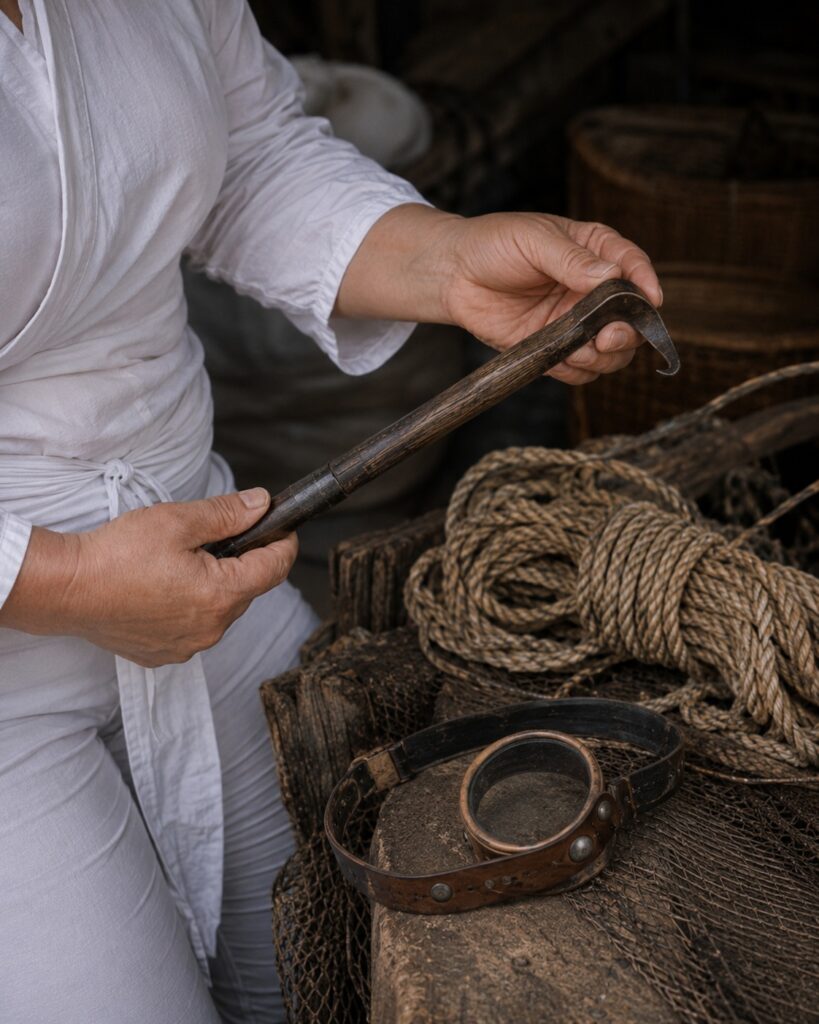
Ama diving is often remembered through the image of a diver in the sea, but the work depends on a connected material system. Goggles, hand tools, floats, catch bags, clothing and the ama hut all shape how a working day begins, repeats and ends.
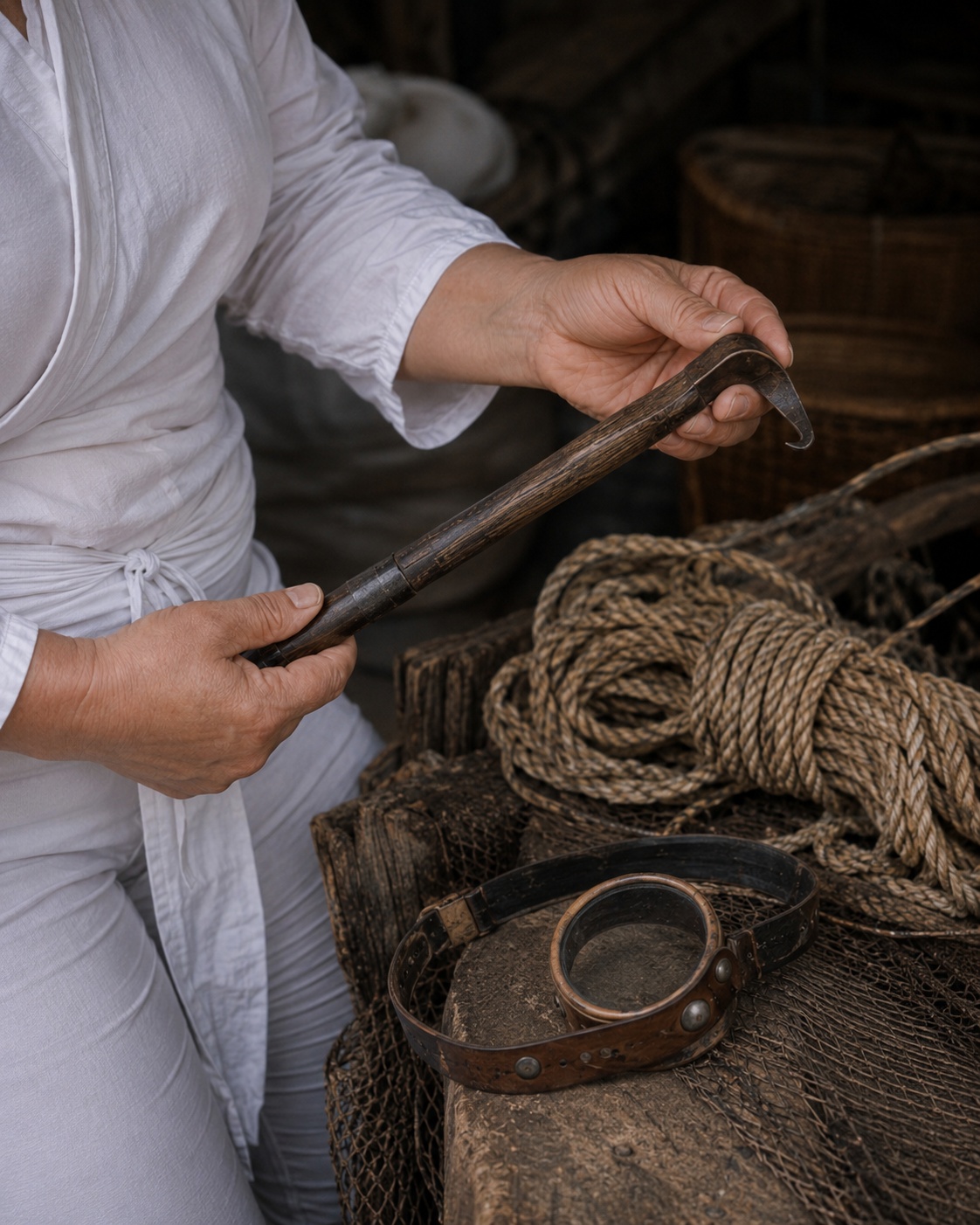
Equipment makes the working system visible.
A historically useful reconstruction needs more than a white-clad diver and the sea. The equipment has to connect to body movement, depth, gathering work, recovery and the spaces before and after the dive. OCS therefore treats every object as part of a sequence rather than as isolated nostalgia.
Key items in the 1972 Anori archive
Diving goggles that help the diver see underwater.
A hand tool used in gathering work.
Surface equipment that belongs to the repeated rhythm of dive and return.
Containers that connect underwater gathering to the material result of the dive.
Clothing is part of weather, movement and occupational practice, not just costume.
Preparation, warming and recovery continue the working system on land.
The equipment is regional and time-specific.
Ama culture is not one frozen national costume. Equipment, clothing and working organization can vary by region and period. The OCS line is therefore constrained to Anori in Mie Prefecture and a 1972 research frame. Details from other coasts or later decades are not automatically projected onto this archive.
Equipment and the rhythm of one dive
The sequence begins before entering the water: prepare clothing and tools, move from hut to shore or boat, descend, gather, return to the surface, recover, then repeat. The breathing sound known as isobue belongs to that surface recovery rhythm. The final return to warmth is just as important to the working day as the underwater moment.
See the equipment inside a working life.
Shino Hamasaki is a fictional adult character used to connect researched equipment, movement and place into one continuous 1972 sequence.
FAQ
What equipment do Japanese ama divers use?
Equipment varies by place and period. The 1972 Anori archive includes iso-megane goggles, a kaginomi hand tool, floats, catch bags, work clothing and the ama hut as part of the wider working system.
Do ama divers use scuba tanks?
Traditional ama work is defined by breath-hold diving rather than underwater breathing tanks.
Why is the ama hut included as equipment?
It is better understood as a facility, but it belongs to the same working system because preparation, warming and recovery happen there.